Buñuelos De Almendras
"Almond Fritters"
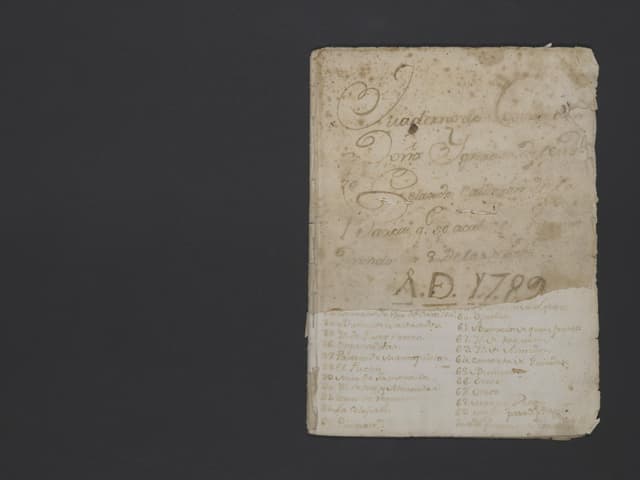
From the treasured pages of Cuaderno de Cosina de Dona Ignacita
Unknown Author
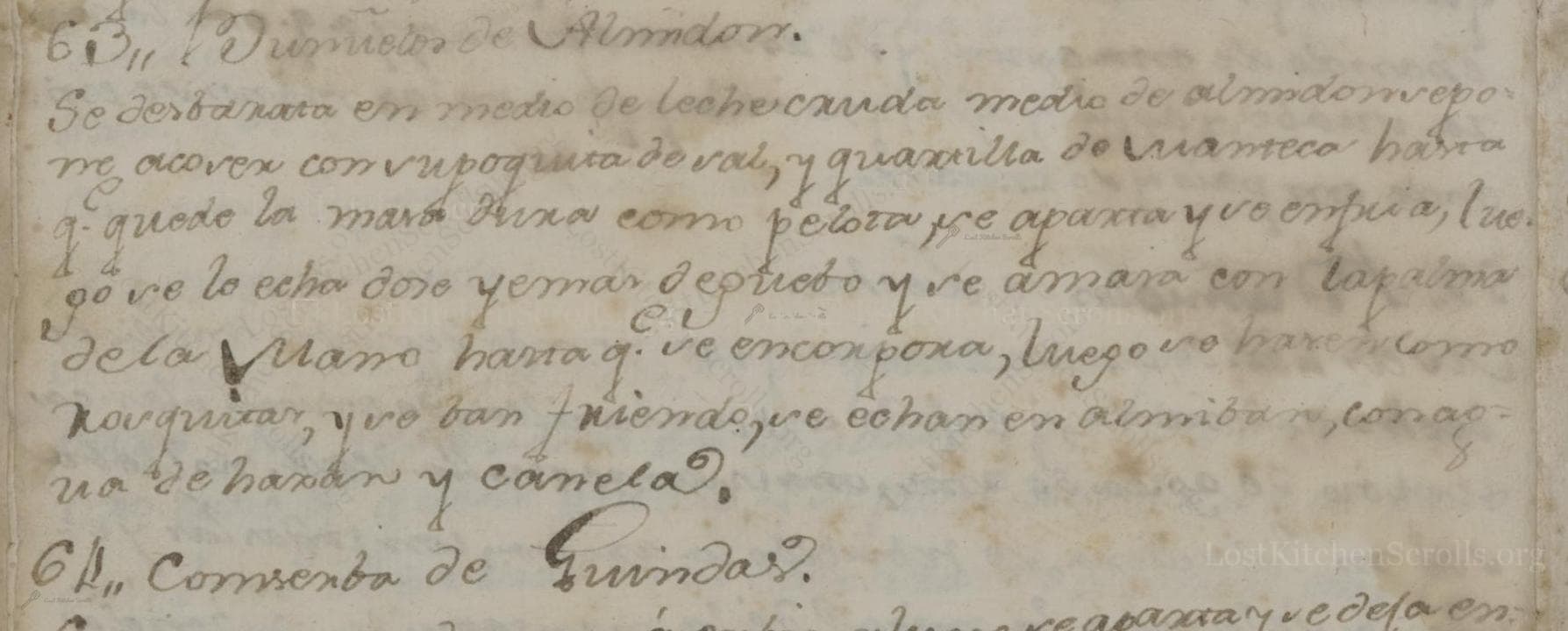
Buñuelos De Almendras
"Se desbarata en medio de leche caida medio de almendras, y se pone a cozer con su poquita de sal, y quartilla de manteca hasta q. quede la masa fixa como pelota, y se aparta y se enfria, luego se le echa doze yemas de la mano hasta q. se incorpora, luego se haze rosquitas, y se ban friendo, se echan en almibar, y se ban de hazer y comer."
English Translation
"Break up (the mixture) in some curdled milk and some almonds, and cook it with a little salt and a quarter of lard until the dough becomes firm like a ball. Then remove it and let it cool, then add a dozen egg yolks by hand until incorporated. Then shape into little rings, and fry them, put them in syrup, and continue making and eating them."
Note on the Original Text
The original recipe uses a narrative, almost conversational tone, presuming the cook’s intuitive knowledge. Quantities are often described with references—'medio de leche' (about half a measure), 'doze yemas de la mano' (twelve yolks by hand), or simply 'poquita de sal' (a little salt)—implying a reliance on experience rather than precise measurements. Spelling reflects period orthography ('cozer' for 'cocer' or 'cook', 'ban' for 'van'), and punctuation is minimal or inconsistent. The recipe omits detailed timings or temperatures, expecting the reader to use judgement honed by practice.
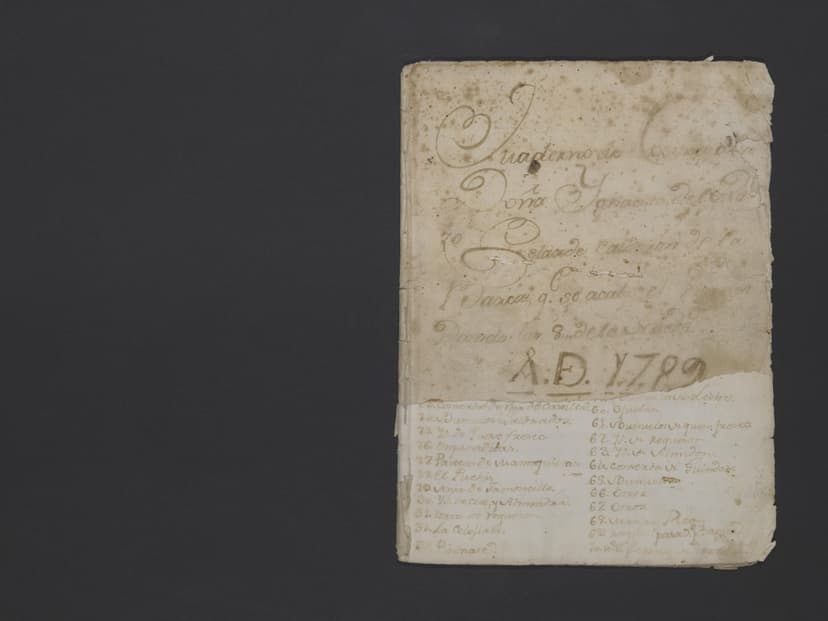
Title
Cuaderno de Cosina de Dona Ignacita (1789)
You can also click the book image above to peruse the original tome
Writer
Unknown
Era
1789
Publisher
Unknown
Background
A delightful 18th-century manuscript brimming with Latin American culinary treasures, this cookbook invites readers into kitchens of the past with recipes for savory main courses, tempting sides, and sweet desserts like postre de calabacitas de negro, gaspacho, zopa de naranja, and potaje escondido.
Kindly made available by
University of Texas at San Antonio
This recipe hails from the late 18th-century Cuaderno de Cosina of Doña Ignacita, a fascinating manuscript cookbook produced in colonial Latin America. The collection captures both European influences and local adaptations found in the kitchens of the Spanish Americas. Buñuelos de Almendras—almond fritters soaked in syrup—reflect both the Moorish traditions inherited from Spain and the colonial penchant for extravagant sweets, demonstrating the luxurious use of eggs, almonds, and sugar in elite households. Recorded in 1789, these recipes belonged to an era when cookbooks were compiled by hand and used by skilled household cooks or mistresses to orchestrate elaborate feasts, often with local twists on Old World classics.
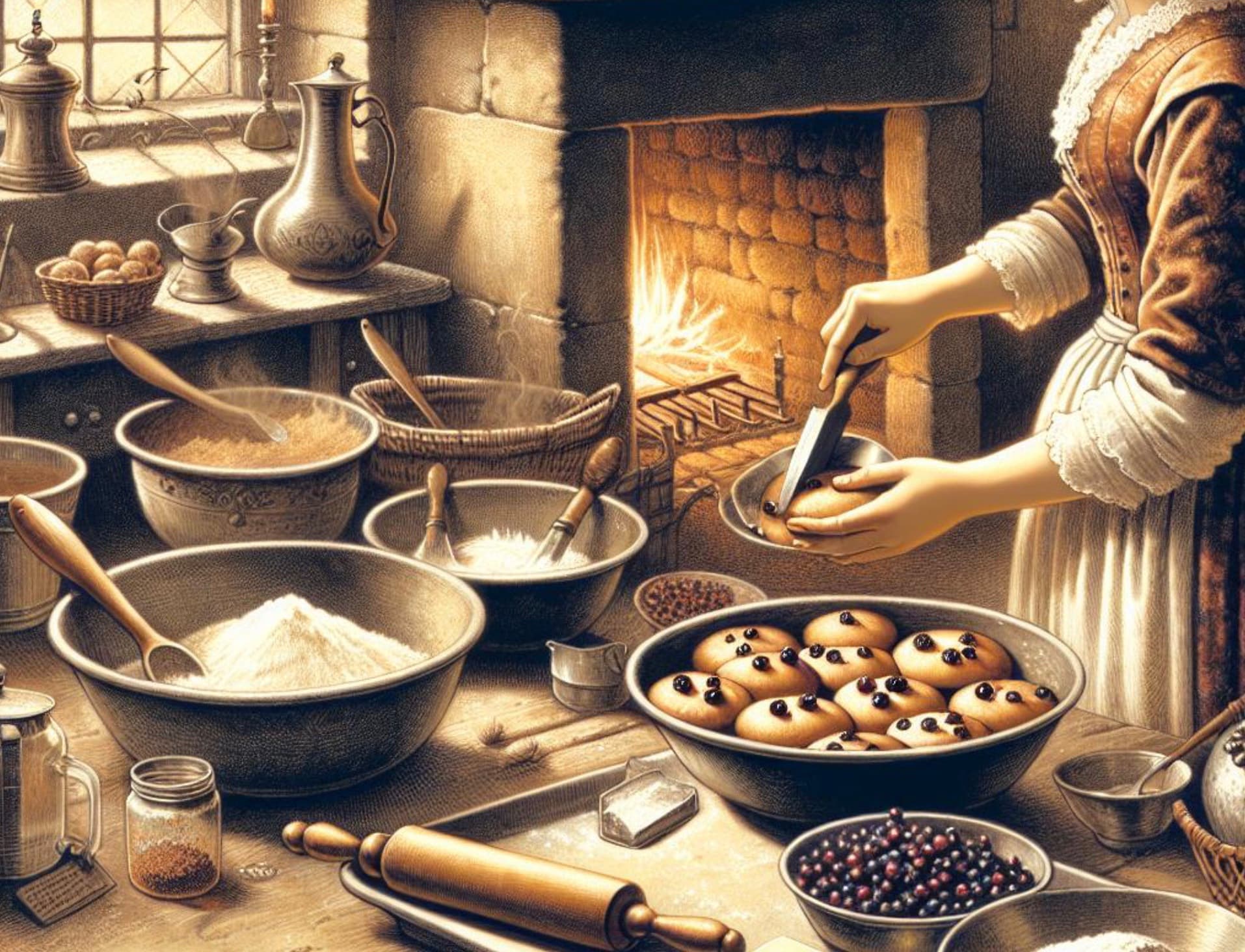
In Doña Ignacita's day, cooks would have used a stone or wooden mortar and pestle (mortero) to crush and blend the almonds, and heavy earthenware or copper pots for thickening the dough over open fire or coals. Mixing the dough and egg yolks would have been done by hand, likely using a wooden spoon or even bare hands for incorporation. Frying took place in deep, wide pans or cazuelas set over a brazier or hearth, with rendered lard or clarified butter as the frying medium. A basic metal pot would have served to boil the sugar syrup, and finished buñuelos would be fished from the oil with a slotted spoon or wire skimmer, then quickly dipped into the waiting almíbar.
Prep Time
40 mins
Cook Time
30 mins
Servings
16
We've done our best to adapt this historical recipe for modern kitchens, but some details may still need refinement. We warmly welcome feedback from fellow cooks and culinary historians — your insights support the entire community!
Ingredients
- 4.4 oz blanched almonds (can substitute almond meal)
- 1 cup whole milk
- 1 pinch of salt
- 4.4 oz unsalted butter
- 12 egg yolks
- 2 cups neutral frying oil (such as sunflower or canola)
- 1 1/2 cups granulated sugar
- 1 cup water
Instructions
- Begin by blending 4.4 oz of blanched almonds with about 1 cup of milk to create a smooth almond-milk mixture.
- Pour the mixture into a saucepan, add a pinch of salt, and 4.4 oz of unsalted butter.
- Heat gently, stirring constantly, until the mixture thickens and forms a dough that holds together like a ball.
- Remove from heat and allow to cool completely.
- Once the dough is cool, mix in 12 egg yolks, one at a time, until fully incorporated—you may need to use your hands or a sturdy spoon.
- Shape the dough into small rings or "rosquitas." Heat 2 cups of neutral oil in a deep pan over medium heat.
- Fry the almond rings in batches until golden brown and crisp.
- While they're frying, prepare a simple syrup (almíbar) by boiling 1 1/2 cups sugar with 1 cup water until slightly thickened.
- Dip the hot buñuelos into the syrup, allowing them to soak briefly, then serve immediately.
Estimated Calories
240 per serving
Cooking Estimates
Preparation involves blending, cooking the dough, cooling, shaping the rings, frying, and dipping in syrup. Active cooking time is mainly for frying and making the syrup, while prep includes mixing and shaping.
As noted above, we have made our best effort to translate and adapt this historical recipe for modern kitchens, taking into account ingredients nowadays, cooking techniques, measurements, and so on. However, historical recipes often contain assumptions that require interpretation.
We'd love for anyone to help improve these adaptations. Community contributions are highly welcome. If you have suggestions, corrections, or cooking tips based on your experience with this recipe, please share them below.
Join the Discussion
Rate This Recipe
Den Bockfisch In Einer Fleisch Suppen Zu Kochen
This recipe hails from a German manuscript cookbook compiled in 1696, a time whe...
Die Grieß Nudlen Zumachen
This recipe comes from a rather mysterious manuscript cookbook, penned anonymous...
Ein Boudain
This recipe comes from an anonymous German-language manuscript cookbook from 169...
Ein Gesaltzen Citroni
This recipe, dating from 1696, comes from an extensive anonymous German cookbook...
Browse our complete collection of time-honored recipes