Rabos De Cebolla
"Onion Stalks"
From the treasured pages of El Cocinero Mexicano, Vol. 2
Written by Mariano Arevalo; Mariano Galvan Rivera
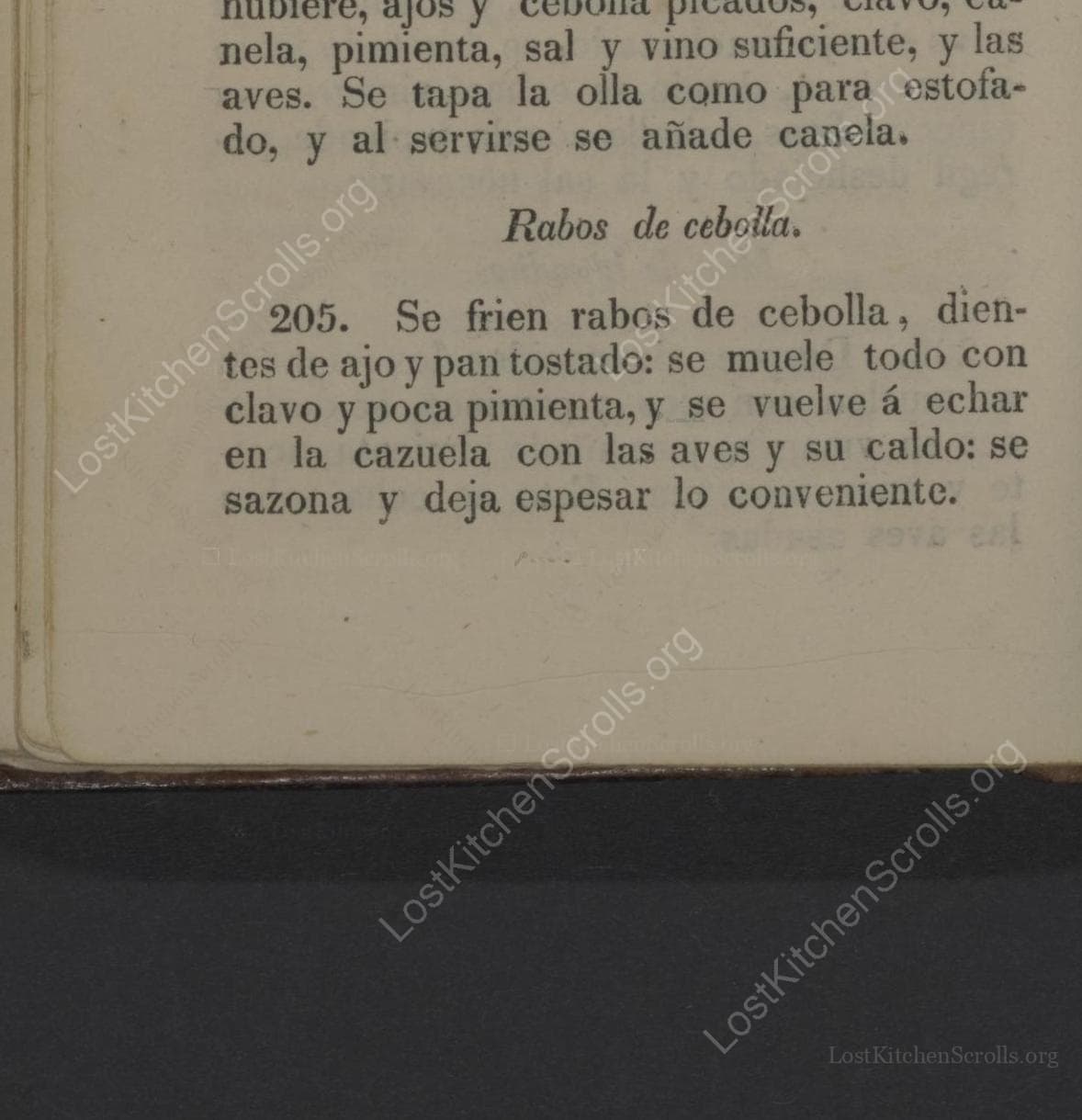
Rabos De Cebolla
"205. Se frien los rabos de cebolla, dientes de ajo y pan tostado: se muele todo con clavo y poca pimienta, y se vuelve á echar en la cazuela con las aves y su caldo: se sazona y deja espesar lo conveniente."
English Translation
"Onion stalks. 205. Fry the onion stalks, garlic cloves, and toasted bread; grind everything together with clove and a little pepper, and return it to the pot with the poultry and its broth. Season and let it thicken to the desired consistency."
Note on the Original Text
Early 19th-century Mexican recipes like this were written as brief, almost telegraphic instructions, assuming a high level of kitchen knowledge. Measures were not specified, and steps could be condensed into a single sentence. Spelling conventions, grammar, and punctuation were also less standardized—words like 'se vuelve á echar' (meaning 'return to the pot') and 'rabos de cebolla' (literally 'onion tails') reflect colloquial and regional usage. The ingredient list was implicit, often listing only key items, and the methods emphasized intuition and adaptation rather than strict adherence to written text.
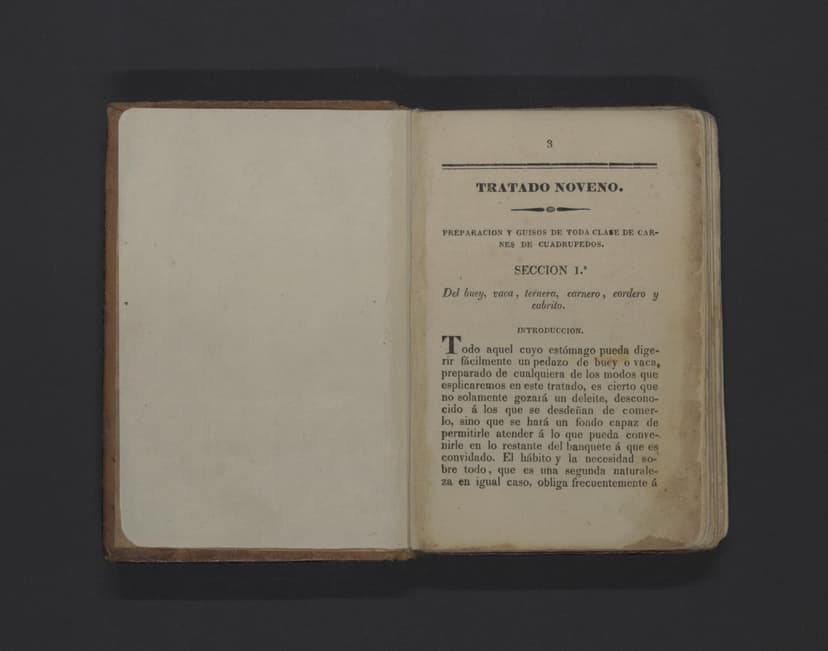
Title
El Cocinero Mexicano, Vol. 2 (1831)
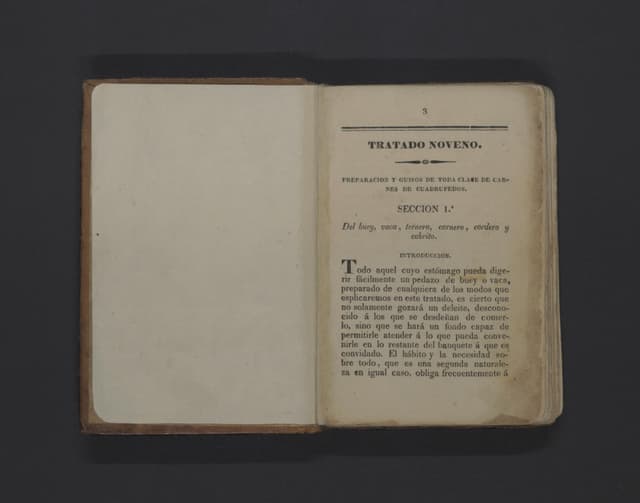
You can also click the book image above to peruse the original tome
Writer
Mariano Arevalo; Mariano Galvan Rivera
Era
1831
Publisher
Unknown
Background
A delightful foray into 19th-century Mexican kitchens, this volume serves up an appetizing array of recipes blending traditional Mexican flair with American culinary influences—a true feast for the adventurous palate.
Kindly made available by
University of Texas at San Antonio
This recipe is from 'El Cocinero Mexicano' (1831), a seminal Mexican cookbook that helped define domestic cookery in post-Independence Mexico. Compiled by Mariano Arevalo and Mariano Galvan Rivera, the text aimed to collect both traditional and contemporary dishes for the Mexican home, at a time when national identity was being shaped at the table. 'Rabos de cebolla' is a clever, rustic dish making use of the often-discarded green onion tops. Combined with day-old bread and modest spices, this recipe demonstrates the resourcefulness and depth of Mexican home kitchens of the era. It was typically served with poultry, transforming humble scraps into a flavorful sauce or braise.
In the early 1800s, this recipe would have been prepared in a clay or iron cazuela (casserole dish) over a wood fire or charcoal brazier. The green onion tops, garlic, and bread would have been fried in lard or rendered poultry fat in the cazuela, then ground together with a stone molcajete (mortar and pestle) to form a paste. Cooking would continue in the same cazuela, with the poultry and broth added and the sauce simmered until thick. Spoons made from wood or horn were used to stir the pot, and serving was done from the vessel directly to the table.
Prep Time
10 mins
Cook Time
25 mins
Servings
4
We've done our best to adapt this historical recipe for modern kitchens, but some details may still need refinement. We warmly welcome feedback from fellow cooks and culinary historians — your insights support the entire community!
Ingredients
- 7 oz scallion greens (or green tops of 2 bunches spring onions, 'rabos de cebolla')
- 2 tbsp (2 fl oz) vegetable oil or lard (for frying)
- 3 garlic cloves
- 1.5 oz crusty bread (stale or toasted)
- 1/8 tsp ground cloves
- pinch ground black pepper
- 14 oz cooked poultry (chicken, hen, or other game birds), cut into pieces
- 2 cups poultry broth
- salt, to taste
Instructions
- To recreate 'Rabos de cebolla' today, begin by cutting the green tops (scallion greens) from about 2 bunches of fresh spring onions—these are your 'rabos de cebolla.' In a frying pan, heat 2 tablespoons (2 fl oz) of vegetable oil over medium heat.
- Sauté the onion tops until just golden, about 3–4 minutes.
- Add 3 peeled garlic cloves and fry gently for 2 more minutes, then add 1 thick slice (about 1.5 oz) of crusty bread (stale or toasted) and fry until nicely golden.
- Remove everything from the pan and place in a blender or mortar.
- Add a pinch of ground cloves (about 1/8 teaspoon) and a small pinch of ground black pepper.
- Blend or pound until you have a thick, fragrant paste.
- Return the paste to the pan.
- If you're recreating the original intention, add in about 14 oz of cooked poultry pieces (such as braised chicken or game) and 2 cups of their cooking broth.
- Season with salt to taste.
- Simmer until the sauce thickens and everything is well coated, about 10–15 minutes.
- Serve warm.
Estimated Calories
340 per serving
Cooking Estimates
It takes about 10 minutes to prep the ingredients. Cooking, including sautéing, simmering, and blending, takes around 25 minutes. This recipe makes 4 servings, and each serving is about 340 calories.
As noted above, we have made our best effort to translate and adapt this historical recipe for modern kitchens, taking into account ingredients nowadays, cooking techniques, measurements, and so on. However, historical recipes often contain assumptions that require interpretation.
We'd love for anyone to help improve these adaptations. Community contributions are highly welcome. If you have suggestions, corrections, or cooking tips based on your experience with this recipe, please share them below.
Join the Discussion
Rate This Recipe
Dietary Preference
Main Ingredients
Occasions
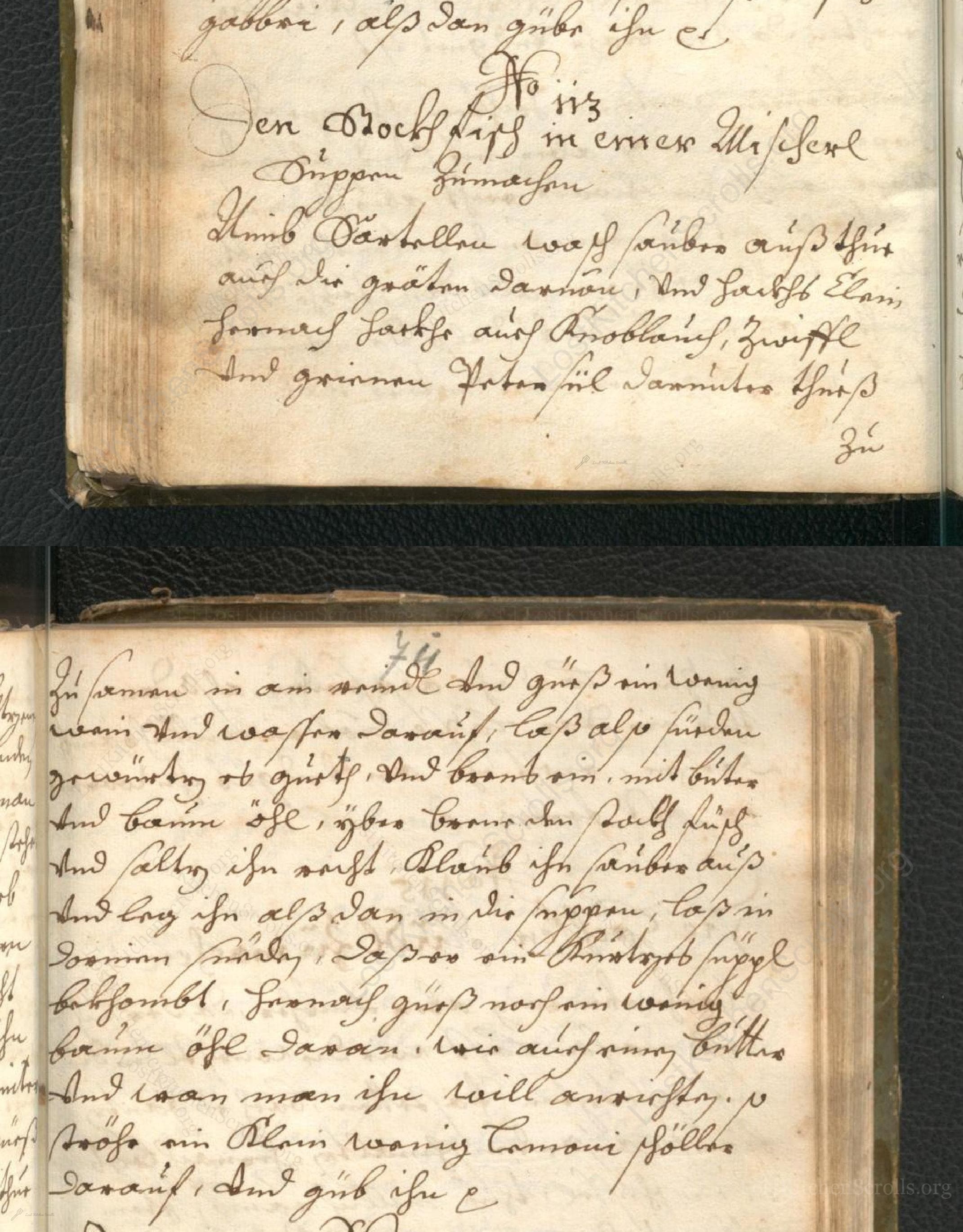
Den Bockfisch In Einer Fleisch Suppen Zu Kochen
This recipe hails from a German manuscript cookbook compiled in 1696, a time whe...
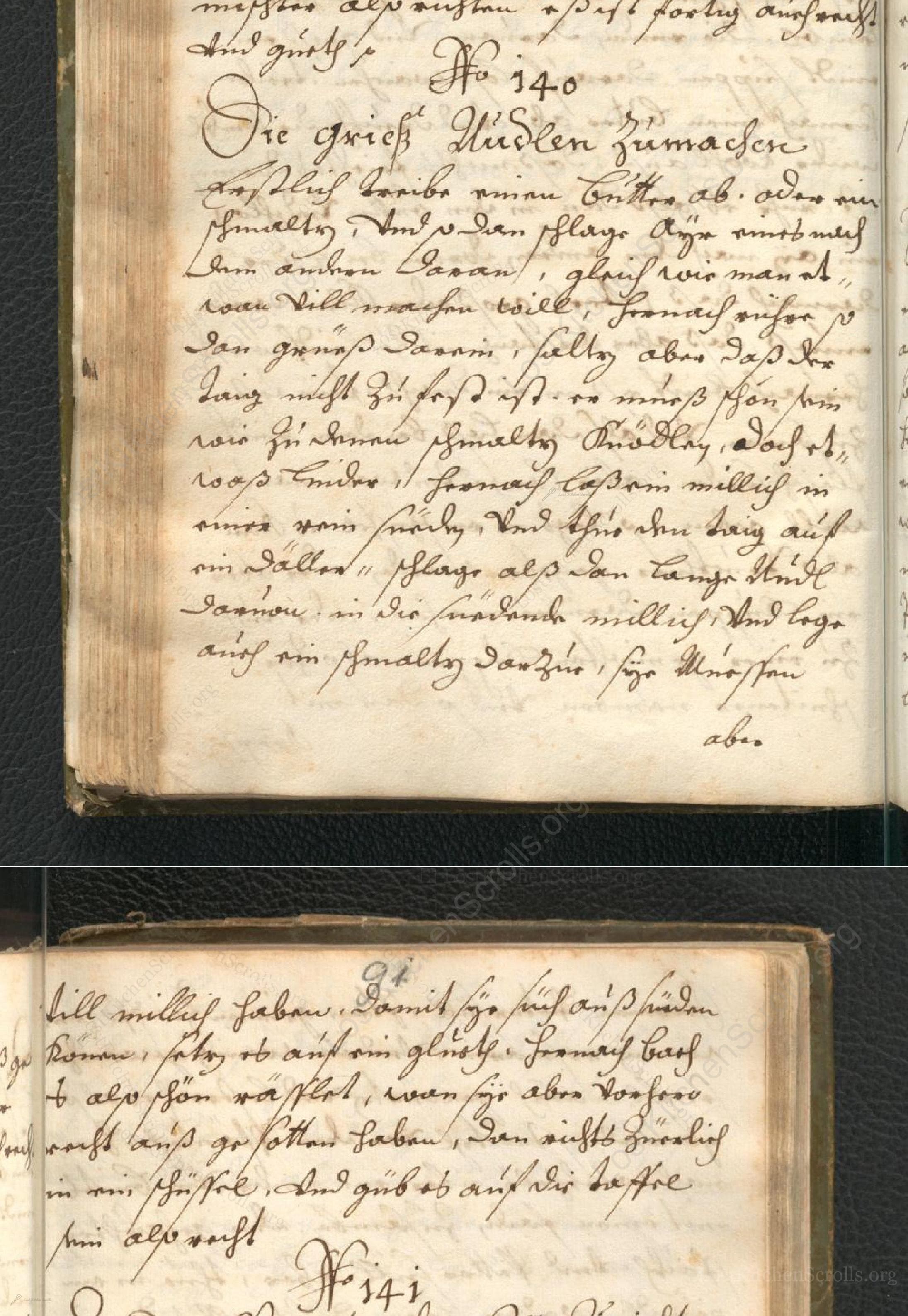
Die Grieß Nudlen Zumachen
This recipe comes from a rather mysterious manuscript cookbook, penned anonymous...
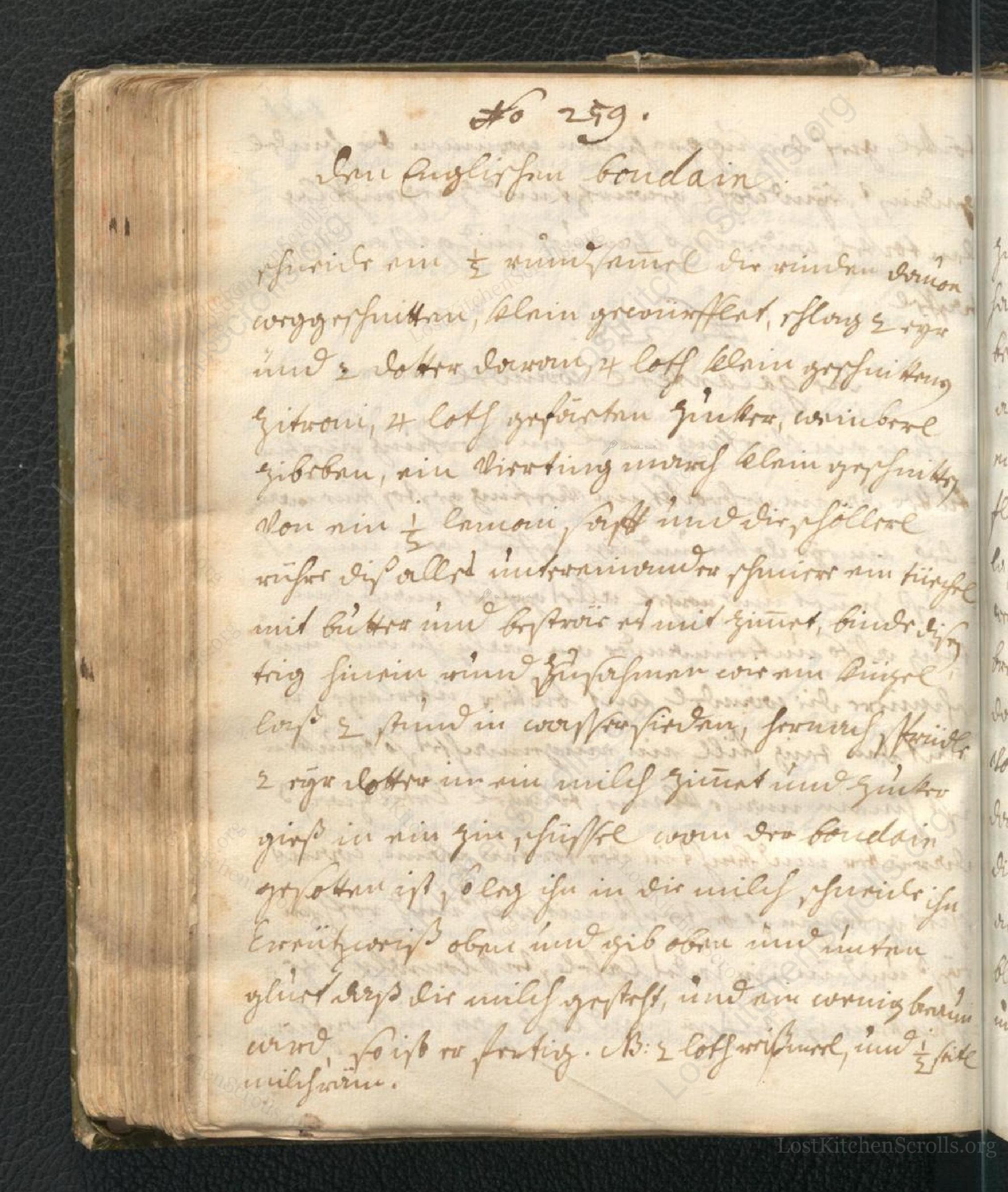
Ein Boudain
This recipe comes from an anonymous German-language manuscript cookbook from 169...
Ein Gesaltzen Citroni
This recipe, dating from 1696, comes from an extensive anonymous German cookbook...
Browse our complete collection of time-honored recipes