To Make White Elder Wine
From the treasured pages of Cookbook of Mary Puleston
Written by Mary Puleston
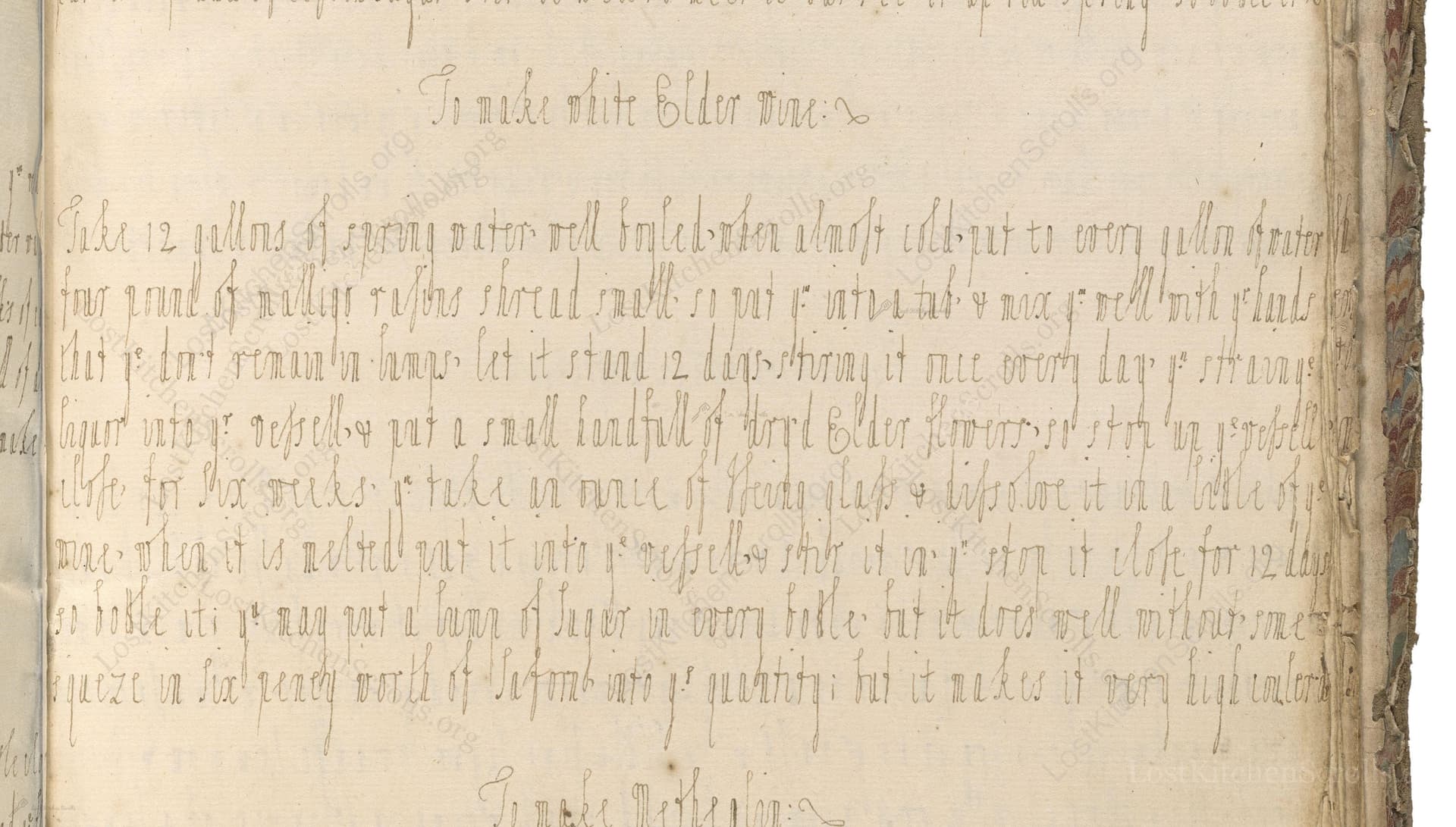
To Make White Elder Wine
"Take 12 gallons of spring water well boyled when almost cold put to every gallon of water four pound of malligo raisons shread small. so put ym into a tub & mix ym well with yr hands so that ye don't remain in lumps. let it stand 12 days stiring it once every day. yr strain ye liquor into yr vessell & put a small handfull of dry'd Elder flowers; so stop up yr vessell close for six weeks. yr take an ounce of Ising glass & disolve it in a litle of ye wine when it is melted put it into yr vessell & stir it in; yr stop it close for 12 days to rostle it. ye may put a lump of sugar in every botle. but it does well without; some squeze in six pency worth of Safomb into ye quantity; but it makes it very high colord"
Note on the Original Text
The recipe is written in characteristic 18th-century English with many abbreviations and archaic words—such as 'to rostle' (to settle/clarify), 'Malligo raisons' (Malaga raisins, now usually called Malmsey), 'isinglass' (a clarifying agent made from fish bladders), and 'Safomb' (a phonetic spelling of saffron). Spelling reflects the nonstandardized conventions of the time: 'ym' means 'them', 'ye' is 'the', 'yr' stands for 'your', and quantities are specified informally ('lump', 'handfull'). Recipe instructions assume a high degree of practical knowledge by the reader, consistent with domestic manuscript cookery of the period.
Title
Cookbook of Mary Puleston (1764)
You can also click the book image above to peruse the original tome
Writer
Mary Puleston
Era
1764
Publisher
Unknown
Background
A tantalizing compilation of 18th-century culinary wisdom, this collection artfully preserves the flavors, techniques, and charms of British cookery before 1764—inviting modern gourmets to savor a taste of history with every recipe.
Kindly made available by
Folger Shakespeare Library
This recipe hails from mid-18th century Britain, compiled before 1764 by Mary Puleston. During this time, making wine at home from local fruits and botanicals was a common practice for country households. Elder-flower wine was especially popular due to the abundance of elder trees and the distinctive floral character the blossoms imparted to beverages. Wine made from raisins—often from imported Spanish or Canary varieties like Malmsey—acted as a creative substitute for grape wine, which was expensive and reserved for the wealthy. Recipes such as this reflect both resourcefulness and the evolving culinary landscape of the period.
The process would have required large earthenware or wooden tubs for fermenting, a stout wooden spoon or paddle for stirring, a linen cloth or fine sieve for straining, and tightly sealed stoneware or glass bottles for aging and storage. Additionally, a small saucepan would be used for dissolving isinglass, with the wine stored in a cool cellar to mature.
Prep Time
2 hrs
Cook Time
1 hr
Servings
180
We've done our best to adapt this historical recipe for modern kitchens, but some details may still need refinement. We warmly welcome feedback from fellow cooks and culinary historians — your insights support the entire community!
Ingredients
- 12 gallons spring water
- 48 pounds Malmsey (Malaga) raisins, finely chopped (or use high-quality regular raisins)
- 0.35 ounces dried elderflowers
- 1 ounce isinglass (or 1 ounce vegetarian gelatin for clarification)
- 2–4 ounces granulated sugar (1 lump per bottle, optional)
- 2–3 teaspoons saffron extract (optional, for color)
Instructions
- Bring 12 gallons of spring water to a boil and then allow it to cool until just warm.
- For every gallon of water, use about 1 pound of Malmsey (Malaga) raisins, finely chopped.
- Combine raisins and cooled water in a large sanitized container, mixing thoroughly by hand until no lumps remain.
- Cover the mixture loosely and let it ferment at room temperature for 12 days, stirring once each day.
- After fermentation, strain the liquid through a fine cloth or sieve into a clean fermentation vessel.
- Add a small handful (about 0.35 ounces) of dried elderflowers.
- Seal the vessel tightly and let it rest undisturbed for 6 weeks.
- Melt 1 ounce of isinglass (or vegetarian gelatin substitute) in a small amount of the wine.
- Once dissolved, stir this back into the main batch to help clarify the liquid.
- Seal and let sit for another 12 days.
- When bottling, you can add a sugar lump (0.2–0.35 ounces) to each bottle for sweetness, or leave as is for a drier wine.
- Optionally, add a small squeeze (about the equivalent of modern sixpence, perhaps 2–3 teaspoons) of saffron extract, but be aware this will give the wine a deep golden color.
Estimated Calories
200 per serving
Cooking Estimates
This recipe takes time mostly for fermenting and clarifying the wine. Actual hands-on prep and cooking is limited to chopping raisins, boiling and cooling water, and mixing ingredients. The majority of the process is waiting for fermentation and clarification to finish. Each serving is about 250 ml, similar to a standard glass of wine. The calorie estimate is based on the sugar content of raisins and assumes minimal residual sugar.
As noted above, we have made our best effort to translate and adapt this historical recipe for modern kitchens, taking into account ingredients nowadays, cooking techniques, measurements, and so on. However, historical recipes often contain assumptions that require interpretation.
We'd love for anyone to help improve these adaptations. Community contributions are highly welcome. If you have suggestions, corrections, or cooking tips based on your experience with this recipe, please share them below.
Join the Discussion
Rate This Recipe
Dietary Preference
Main Ingredients
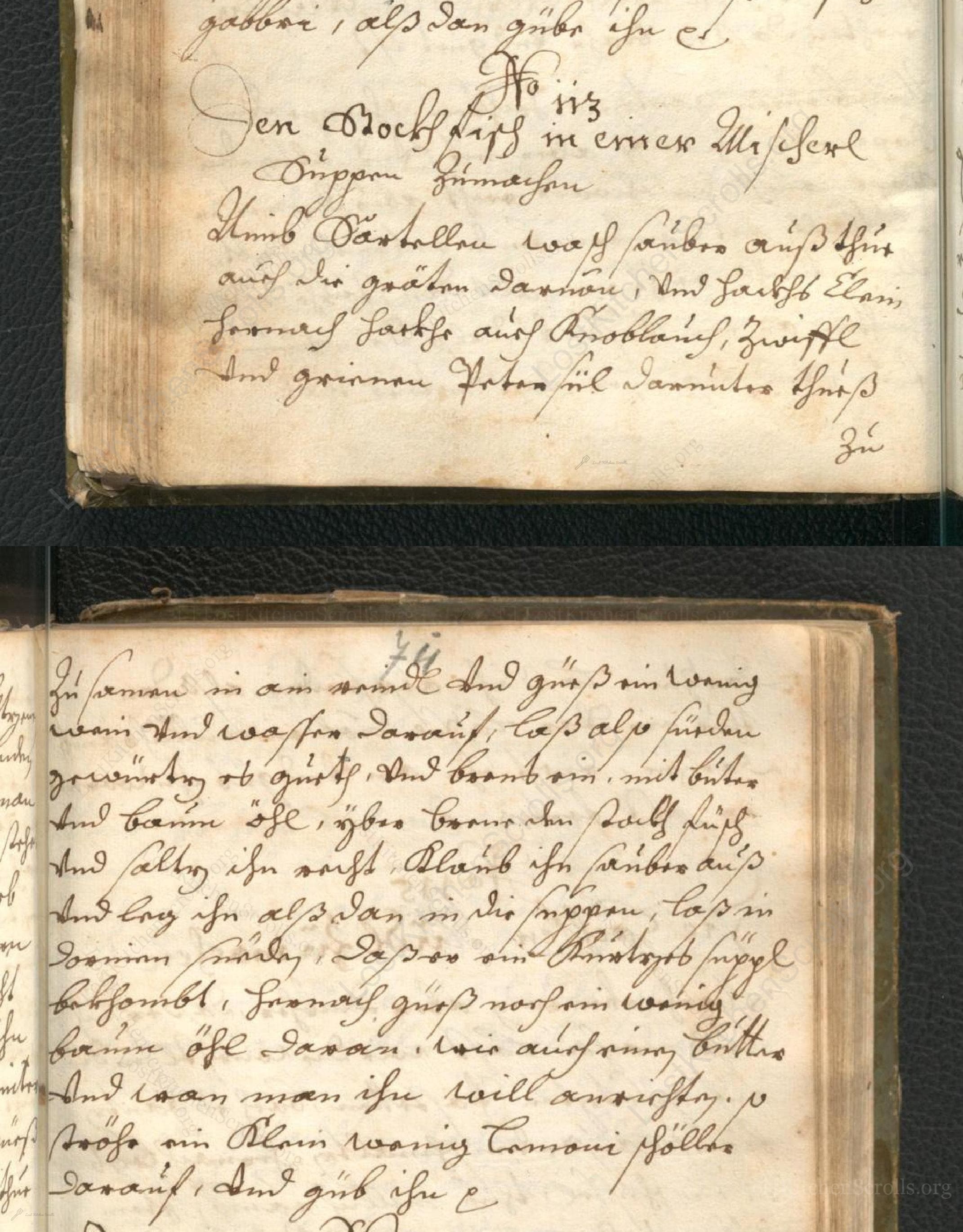
Den Bockfisch In Einer Fleisch Suppen Zu Kochen
This recipe hails from a German manuscript cookbook compiled in 1696, a time whe...
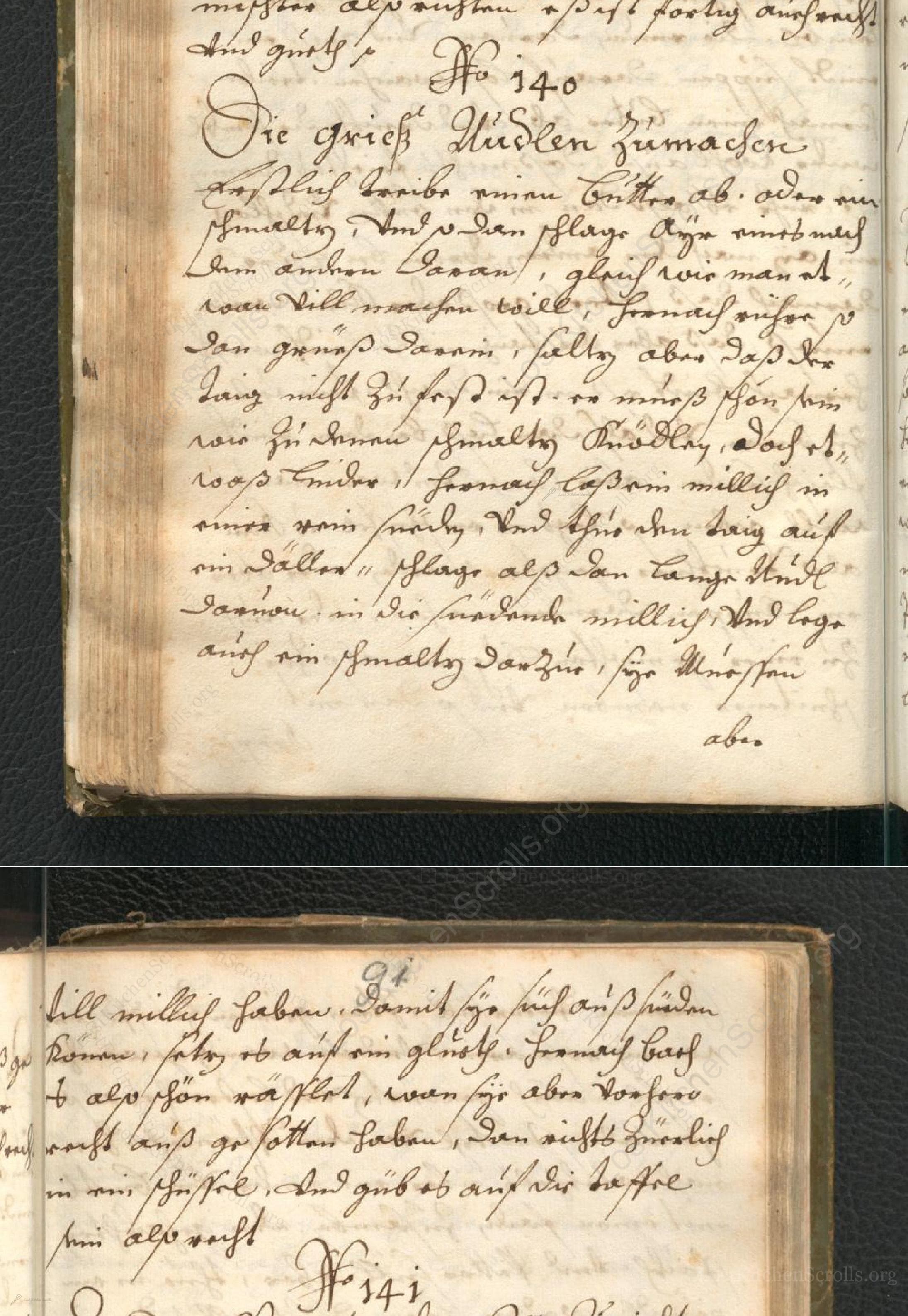
Die Grieß Nudlen Zumachen
This recipe comes from a rather mysterious manuscript cookbook, penned anonymous...
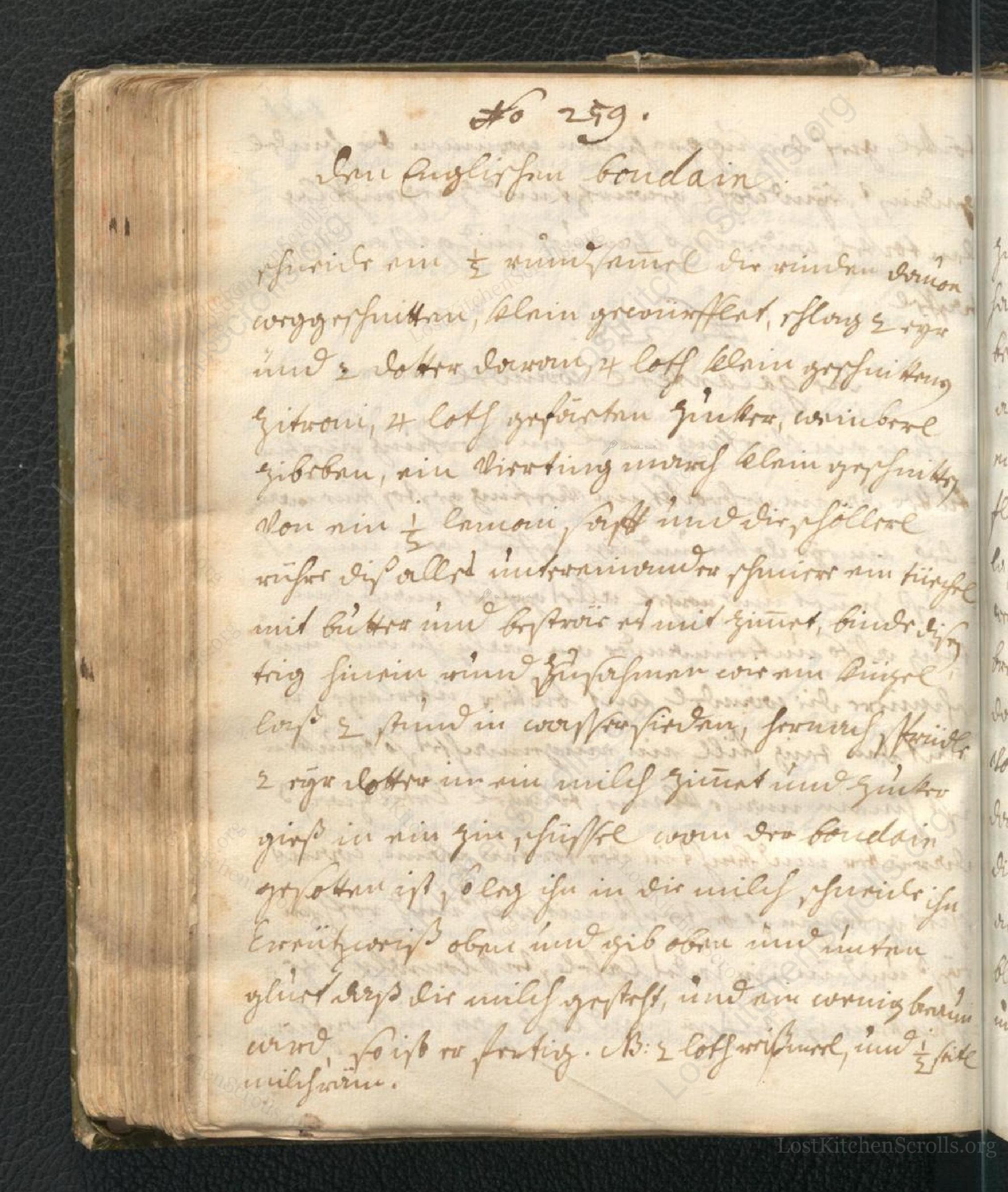
Ein Boudain
This recipe comes from an anonymous German-language manuscript cookbook from 169...
Ein Gesaltzen Citroni
This recipe, dating from 1696, comes from an extensive anonymous German cookbook...
Browse our complete collection of time-honored recipes