Bocaditos De Cuaresma
"Lenten Bites"
From the treasured pages of Cuaderno de Carmen Volante
Written by Cármen Volante
Bocaditos De Cuaresma
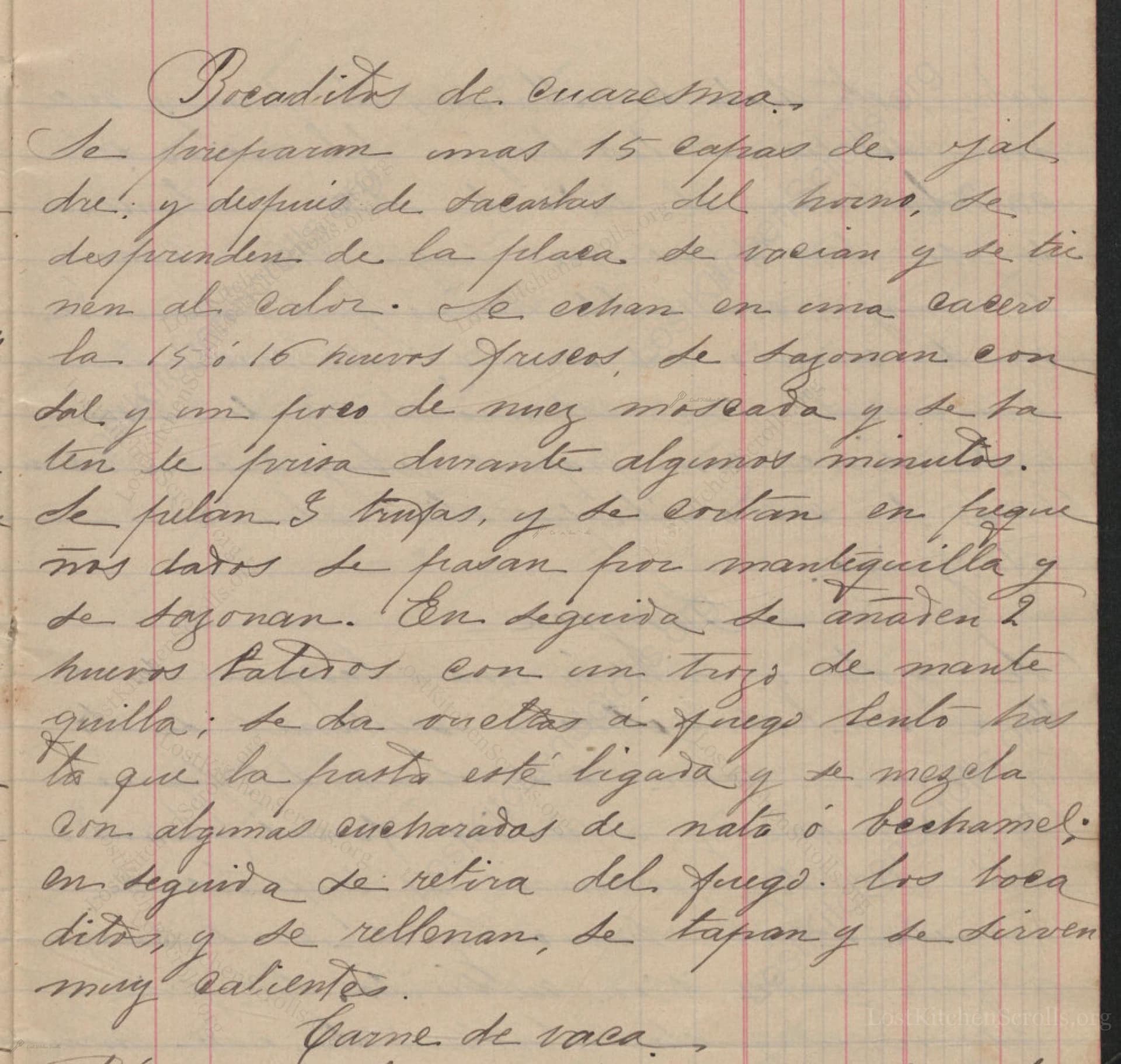
"Se preparan unas 15 costras de hojaldre; y despues de sacarlas del horno, se desprenden de la placa, se mojan y se tienen al calor. Se echan en una cacerola 15 ó 16 huevos frescos, se sazonan con sal y un poco de nuez moscada y se baten de prisa durante algunos minutos. Se pelan 5 trufas, y se cortan en pequeños dados, se pasan por mantequilla y se sazonan. En seguida se añaden 2 huevos batidos con un trozo de mantequilla; se da vueltas a fuego lento hasta que la pasta esté ligada y se mezcla con algunas cucharadas de nata ó bechamel. En seguida se retira del fuego. los bocaditos, y se rellenan, se tapan y se sirven muy calientes."
English Translation
"About 15 puff pastry crusts are prepared; after removing them from the oven, they are taken off the tray, moistened, and kept warm. In a saucepan, crack 15 or 16 fresh eggs, season with salt and a little nutmeg, and beat quickly for several minutes. Peel 5 truffles, cut them into small cubes, sauté them in butter, and season. Then add 2 eggs beaten with a piece of butter; stir over low heat until the mixture has thickened and mix in a few spoonfuls of cream or béchamel. Then remove from the heat. Fill the pastries with the mixture, cover, and serve them very hot."
Note on the Original Text
As was common in historical recipes, the instructions presume previous experience, using phrases like 'batir de prisa' (beat swiftly) without specifying exact times, temperatures, or measurements. Quantities are often given as whole eggs or 'spoonfuls,' requiring cooks to improvise by feel and experience rather than exact science. Spelling is period-accurate ('ó' for 'or', use of the term 'costras' for pastry shells). The recipe avoids brand names or proprietary products, reflecting a world of home-crafted ingredients and a close relationship to seasonal produce.
Title
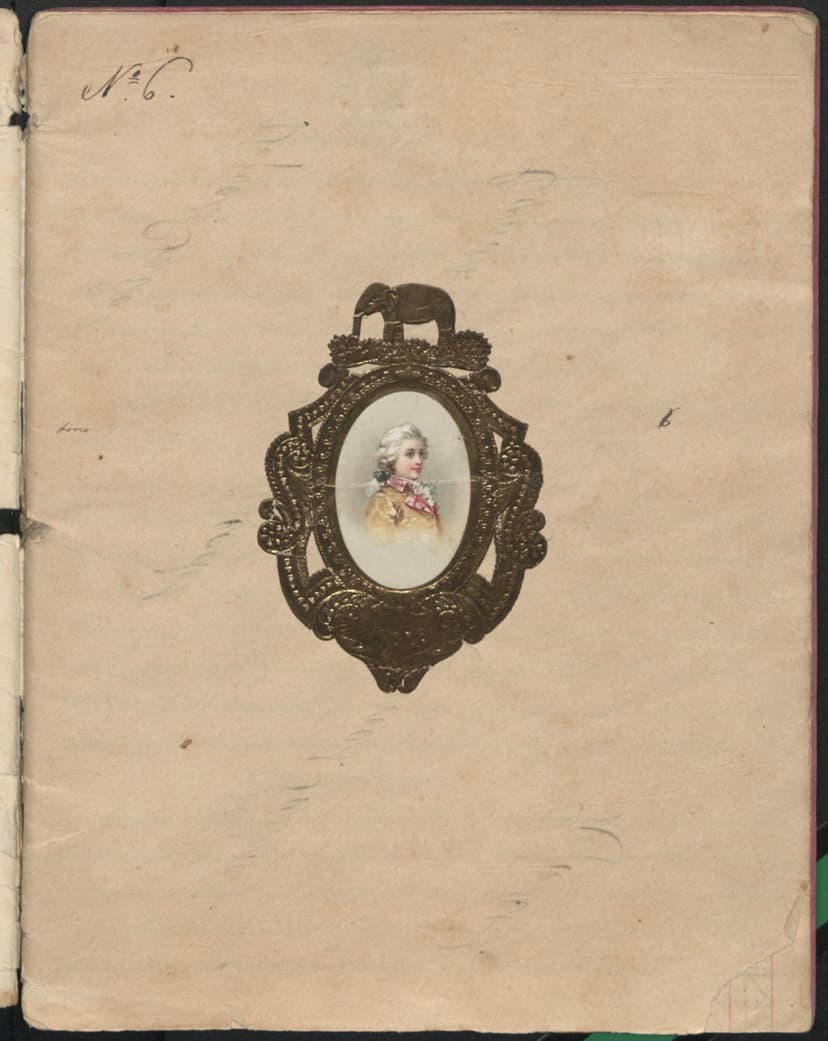
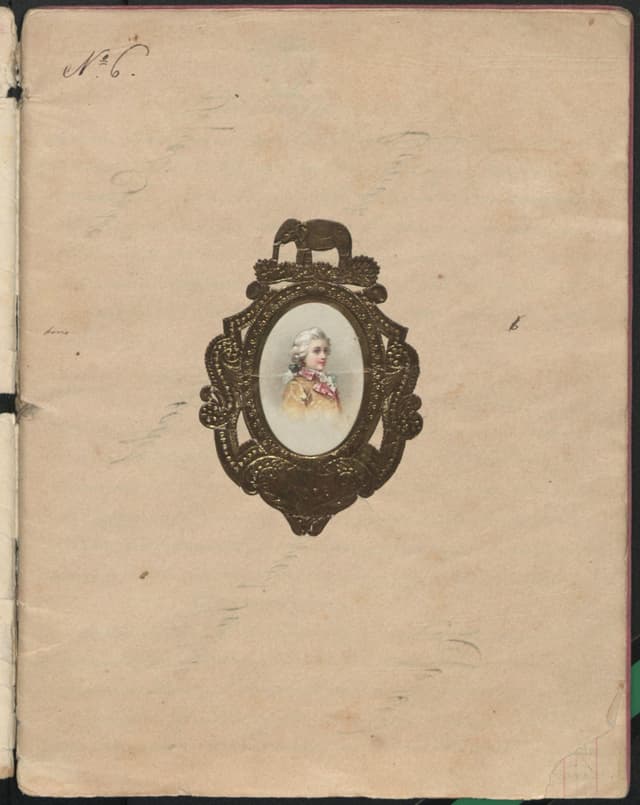
Cuaderno de Carmen Volante (1904)
You can also click the book image above to peruse the original tome
Writer
Cármen Volante
Era
1904
Publisher
Unknown
Background
A handwritten culinary treasure from 1904, this manuscript brims with delicious soups, salsas, tantalizing meat entrées, embutidos, fresh fish, irresistible desserts, preserves, cakes, and refreshing drinks. Each page tempts with recipes sure to inspire any gourmet’s imagination.
Kindly made available by
University of Texas at San Antonio
This recipe, 'Bocaditos de Cuaresma,' appears in a handwritten recipe notebook from 1904 by Carmen Volante. The notebook, called '6o Cuaderno,' is a window onto the domestic cuisine of upper-middle-class Spanish households in the early 20th century. Cuaresma, or Lent, was a period traditionally marked by dietary restrictions that excluded meat, encouraging cooks to be inventive with egg and dairy dishes. This delicate preparation, rich in eggs and truffles, reflects the era’s fondness for refined yet meatless dishes suitable for penance while still offering indulgence for well-to-do families.
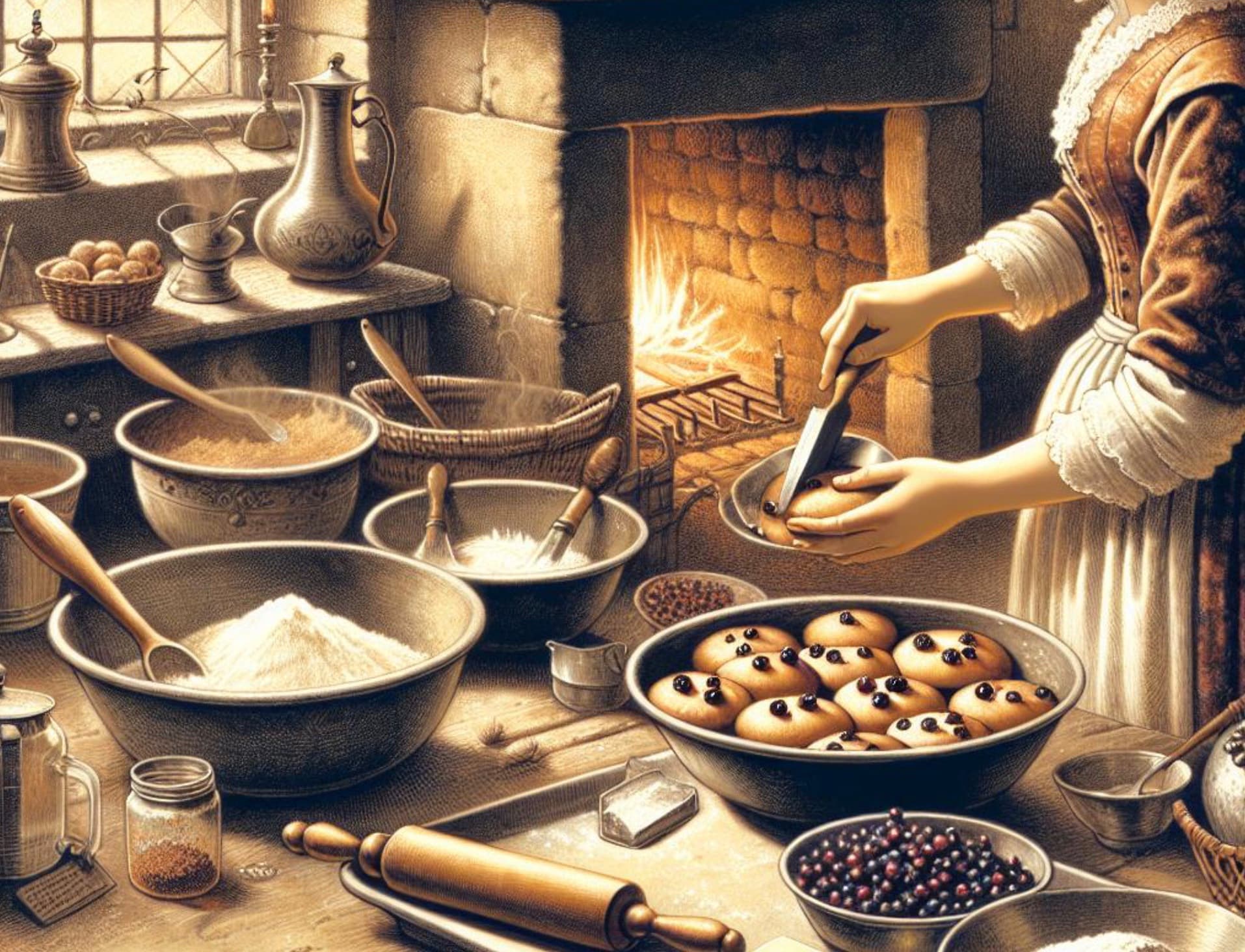
Home cooks of 1904 would have used a wood- or coal-fired oven for baking the puff pastry. A heavy copper or iron pot or casserole would serve for gently scrambling the egg mixture over moderate heat. A wooden spoon or spatula was essential for stirring, ensuring a tender, uncurdled texture. Other likely tools included sharp knives for shaving truffles, a hand whisk for eggs, and a pastry brush or cloth for moistening the baked pastries. All assembly was done by hand, with no electric mixers or food processors in sight.
Prep Time
20 mins
Cook Time
30 mins
Servings
15
We've done our best to adapt this historical recipe for modern kitchens, but some details may still need refinement. We warmly welcome feedback from fellow cooks and culinary historians — your insights support the entire community!
Ingredients
- Puff pastry – 18 oz (to yield 15 costras, cut in 3 in rounds)
- Eggs – 16 large
- Salt – 1/2 teaspoon
- Nutmeg – 1/4 teaspoon, freshly grated
- Black truffles – 5 small (about 1.5–1.75 oz total) or substitute with 1.5 oz mushrooms and a few drops of truffle oil
- Butter – 4 tbsp (split for truffles and egg mixture)
- Heavy cream or bechamel sauce – 1/4 cup (4 tbsp)
Instructions
- Begin by preparing 15 small rounds or ovals of puff pastry, about 3 inches in diameter each.
- Bake in a preheated oven at 400°F until golden and puffed, about 15 minutes.
- Once baked, immediately lift them off the baking tray, dampen them slightly with a pastry brush dipped in water, and keep them warm under a towel.
- In a mixing bowl, crack 16 large eggs.
- Season with 1/2 teaspoon fine salt and 1/4 teaspoon freshly grated nutmeg.
- Whisk vigorously for several minutes until the eggs are fully combined and frothy.
- Peel 5 fresh truffles (or use a high-quality canned substitute if unavailable) and dice into small cubes.
- Sauté the truffle cubes in 2 tablespoons of butter until aromatic, seasoning lightly with a pinch of salt.
- Add the truffles to the beaten eggs.
- Whisk 2 additional eggs separately with another 2 tablespoons of soft butter, then gently fold into the egg-truffle mixture.
- Pour the mixture into a heavy-bottomed saucepan over very low heat, stirring constantly with a wooden spoon until the mixture thickens to a soft, cohesive scramble.
- Stir in 3–4 tablespoons (about 1/4 cup) of heavy cream or prepared béchamel sauce to enrich and bind the filling.
- Remove from the heat and quickly fill each puff pastry shell with a generous spoonful of the hot egg mixture.
- Place a matching pastry lid on top, and serve immediately while piping hot.
Estimated Calories
180 per serving
Cooking Estimates
It takes about 20 minutes to prep the ingredients, shape the pastry, and make the egg mixture. Baking the puff pastry and cooking the scrambled egg filling takes about 30 minutes. Each costra is one serving and provides an estimate of 180 calories.
As noted above, we have made our best effort to translate and adapt this historical recipe for modern kitchens, taking into account ingredients nowadays, cooking techniques, measurements, and so on. However, historical recipes often contain assumptions that require interpretation.
We'd love for anyone to help improve these adaptations. Community contributions are highly welcome. If you have suggestions, corrections, or cooking tips based on your experience with this recipe, please share them below.
Join the Discussion
Rate This Recipe
Dietary Preference
Main Ingredients
Culinary Technique
Occasions
Den Bockfisch In Einer Fleisch Suppen Zu Kochen
This recipe hails from a German manuscript cookbook compiled in 1696, a time whe...
Die Grieß Nudlen Zumachen
This recipe comes from a rather mysterious manuscript cookbook, penned anonymous...
Ein Boudain
This recipe comes from an anonymous German-language manuscript cookbook from 169...
Ein Gesaltzen Citroni
This recipe, dating from 1696, comes from an extensive anonymous German cookbook...
Browse our complete collection of time-honored recipes