Zwiebelsauce Mit Speck Zu Kartoffeln
"Onion Sauce With Bacon For Potatoes"
From the treasured pages of Henriette Davidis praktisches kochbuch für die gewöhnliche und feinere küche
Written by Henriette Davidis
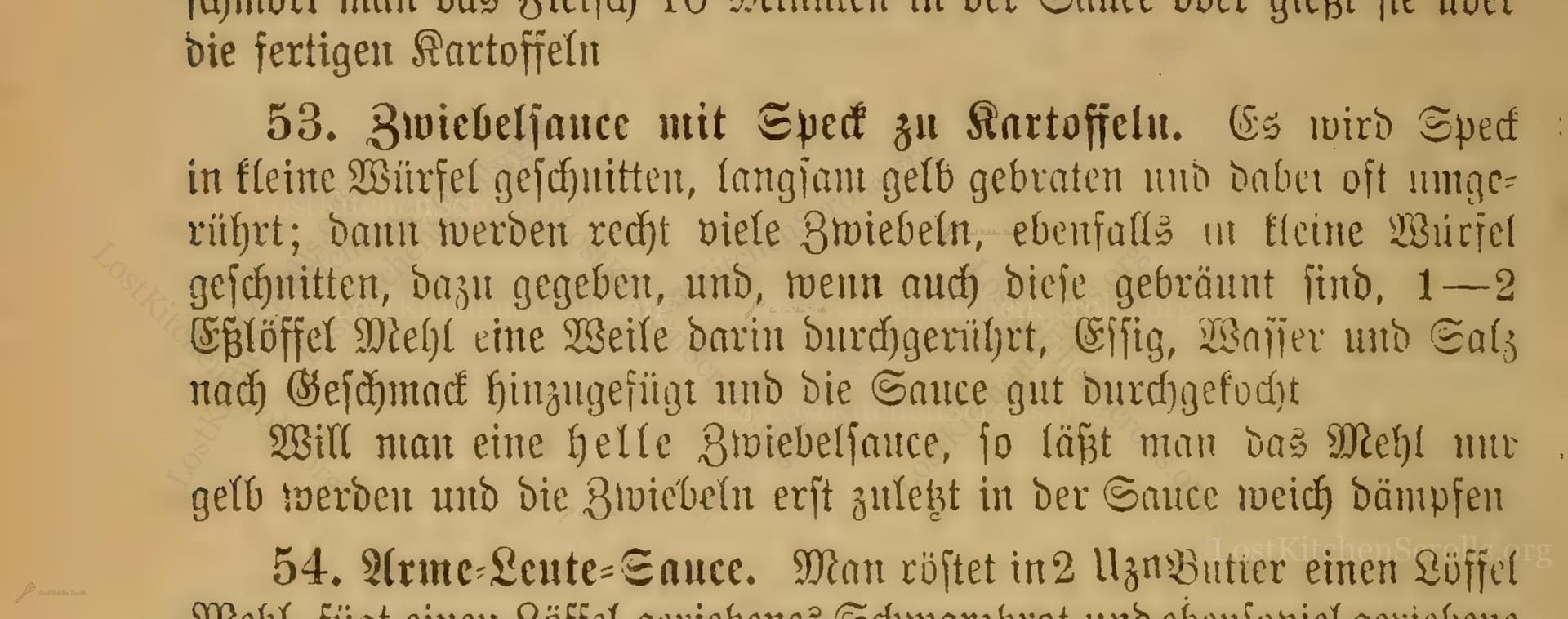
Zwiebelsauce Mit Speck Zu Kartoffeln
"Es wird Speck in kleine Würfel geschnitten, langsam gelb gebraten und dabei oft umge= rührt; dann werden recht viele Zwiebeln, ebenfalls in kleine Würfel geschnitten, dazu gegeben, und, wenn auch diese gebräunt sind, 1—2 Eßlöffel Mehl eine Weile darin durchgerührt, Essig, Wasser und Salz nach Geschmack hinzugefügt und die Sauce gut durchgekocht Will man eine helle Zwiebelsauce, so läßt man das Mehl nur gelb werden und die Zwiebeln erst zuletzt in der Sauce weich dämpfen"
English Translation
"Bacon is cut into small cubes, slowly fried until golden while stirring often. Then quite a lot of onions, also cut into small cubes, are added, and when these are browned as well, 1–2 tablespoons of flour are stirred in for a while. Vinegar, water, and salt are added to taste, and the sauce is cooked thoroughly. If you want a light onion sauce, let the flour only turn yellow and then steam the onions in the sauce until soft at the end."
Note on the Original Text
The recipe reflects the concise, efficient style of 19th-century cookbook writing: ingredients and actions are woven together without formal lists or precise measurements. Quantities are 'nach Geschmack' (to taste), emphasizing intuition and experience in the kitchen. German spelling is mostly modern, though some ligatures and word divisions (e.g. 'umge= rührt') mirror old typesetting practices. The instructions rely on the cook's existing knowledge, assuming familiarity with methods such as making a roux (Mehl anschwitzen) or balancing flavors.
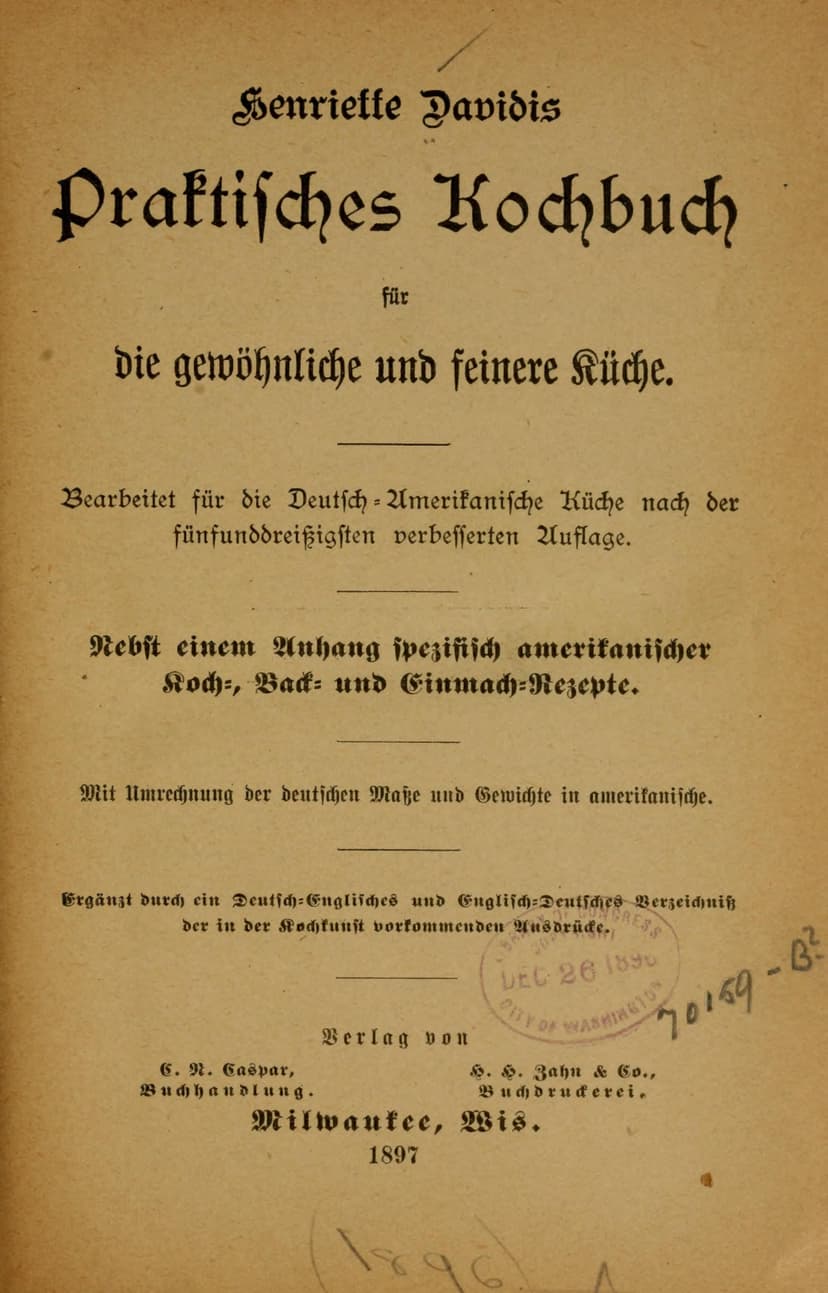
Title
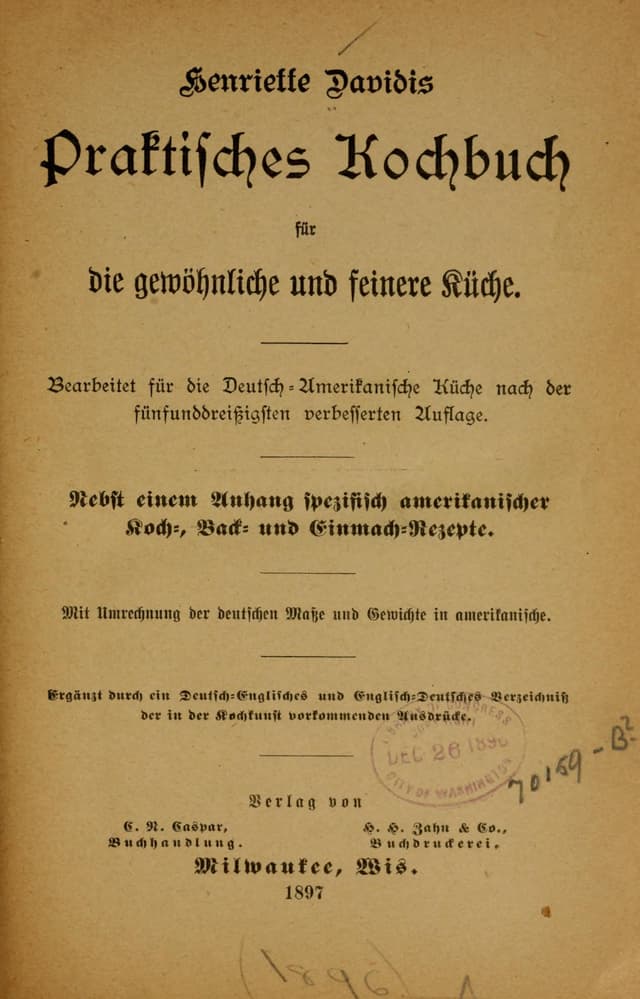
Henriette Davidis praktisches kochbuch für die gewöhnliche und feinere küche (1897)
You can also click the book image above to peruse the original tome
Writer
Henriette Davidis
Era
1897
Publisher
C.N. Caspar
Background
A beloved staple in German kitchens, this practical cookbook by Henriette Davidis serves up a rich array of recipes ranging from everyday fare to refined culinary delights. Immerse yourself in traditional techniques and timeless flavors, all artfully presented for both the ordinary and ambitious cook.
Kindly made available by
Internet Archive
This recipe hails from Henriette Davidis, one of 19th-century Germany’s most important domestic authorities. Her practical cookbooks were a staple in German-speaking households, guiding everyone from beginner cooks to experienced housewives. The Zwiebelsauce mit Speck is a classic example of everyday, hearty fare designed to accompany simple dishes, particularly boiled potatoes. It captures the resourceful, flavor-forward cuisine of the time, where inexpensive ingredients like onions and bacon could be transformed into something deeply satisfying.
Preparations in the late 19th century would have used a sturdy iron or copper pan placed over a wood- or coal-fired stove. Onions and bacon would have been cut with a well-sharpened kitchen knife on a solid wooden board. Stirring would be done with a wooden spoon, ensuring nothing caught at the bottom of the pan. Measuring was typically done by eye or with household spoons rather than precise scales. Water would be ladled or poured from a jug, and vinegar kept in a stoneware bottle.
Prep Time
10 mins
Cook Time
25 mins
Servings
2
We've done our best to adapt this historical recipe for modern kitchens, but some details may still need refinement. We warmly welcome feedback from fellow cooks and culinary historians — your insights support the entire community!
Ingredients
- 3.5oz smoked bacon (or substitute with unsmoked if necessary)
- 2 large onions (approx. 10.5oz), finely diced
- 0.5–1oz (1–2 tablespoons) all-purpose flour
- 0.5–1 fl oz (1–2 tablespoons) vinegar (apple cider or white wine vinegar)
- 7 fl oz water
- Salt, to taste
Instructions
- Cut 3.5oz of smoked bacon into small cubes.
- Place the bacon in a heavy-bottomed pan and gently cook over medium-low heat, stirring frequently, until the fat renders and the bacon turns golden yellow.
- While the bacon cooks, finely dice 2 large onions (approximately 10.5oz).
- Add the diced onions to the pan with the bacon and continue to cook, stirring often, until both the bacon and onions are well browned and soft.
- Sprinkle 1 to 2 tablespoons (0.5–1oz) of all-purpose flour over the mixture, stirring continuously to ensure the flour does not form lumps.
- Cook the flour for a few minutes until it just begins to take on a golden color.
- Add a splash (about 1–2 tablespoons or 0.5–1 fl oz) of vinegar, 7 fl oz of water, and salt to taste.
- Bring to a simmer and cook for several minutes, stirring frequently, until the sauce thickens and the flavors meld.
- For a lighter version of the sauce, cook the flour just until yellow but do not allow it or the onions to brown.
- Then add the onions last and steam them gently in the finished sauce until just soft.
Estimated Calories
250 per serving
Cooking Estimates
It takes about 10 minutes to prepare the ingredients and another 25 minutes to cook everything. This recipe makes about 2 servings. Each serving has around 250 calories.
As noted above, we have made our best effort to translate and adapt this historical recipe for modern kitchens, taking into account ingredients nowadays, cooking techniques, measurements, and so on. However, historical recipes often contain assumptions that require interpretation.
We'd love for anyone to help improve these adaptations. Community contributions are highly welcome. If you have suggestions, corrections, or cooking tips based on your experience with this recipe, please share them below.
Join the Discussion
Rate This Recipe
Dietary Preference
Main Ingredients
Culinary Technique
Occasions
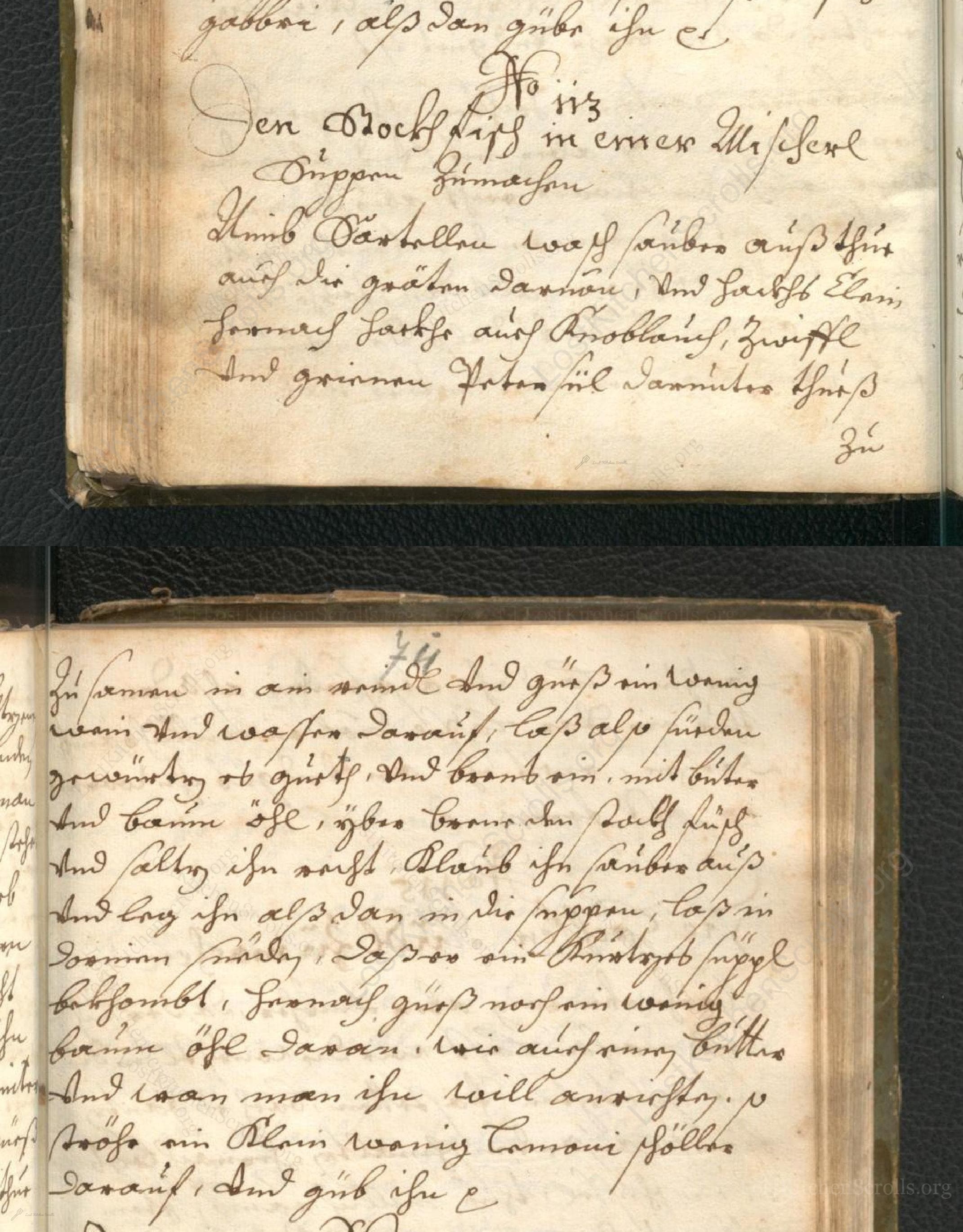
Den Bockfisch In Einer Fleisch Suppen Zu Kochen
This recipe hails from a German manuscript cookbook compiled in 1696, a time whe...
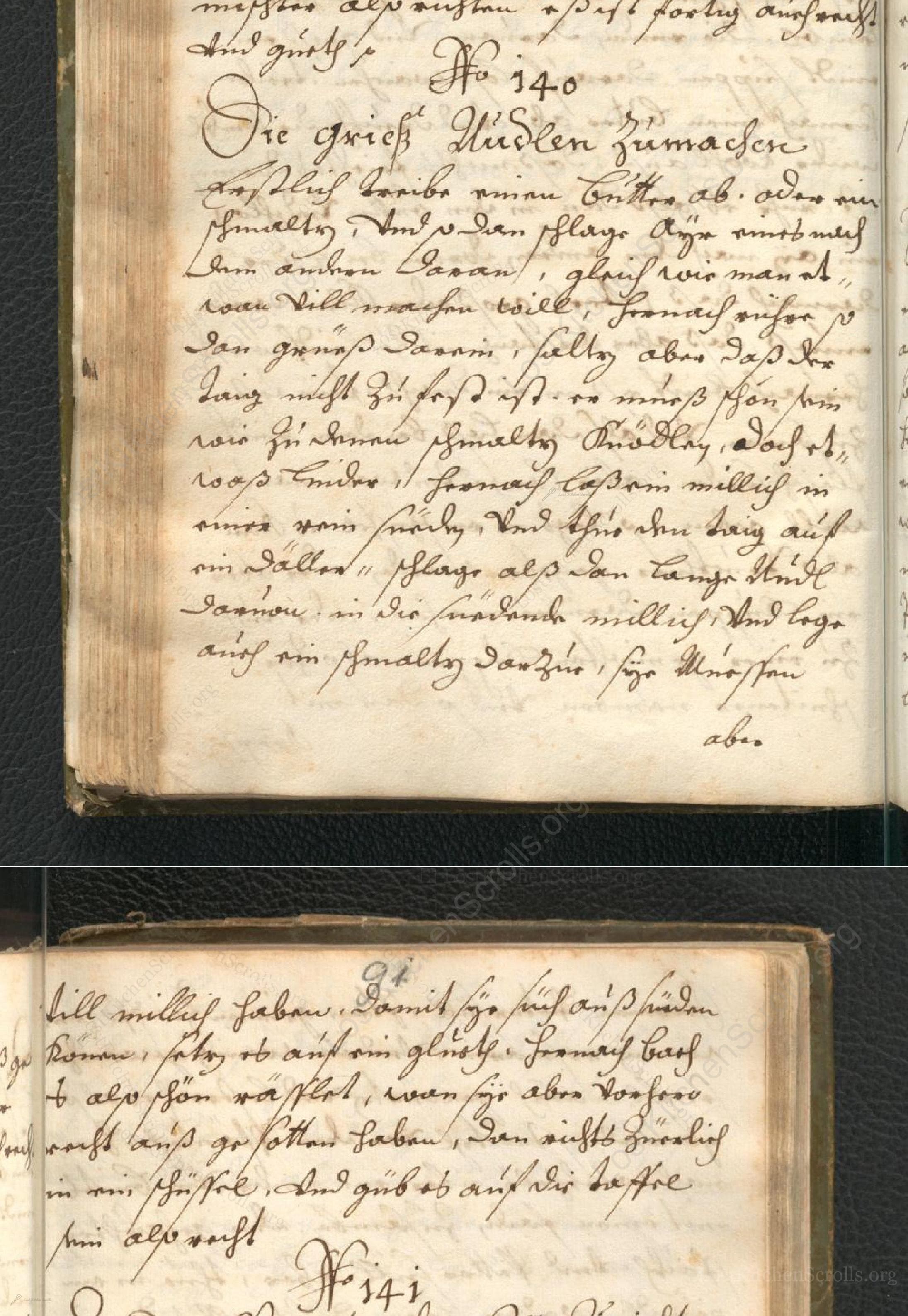
Die Grieß Nudlen Zumachen
This recipe comes from a rather mysterious manuscript cookbook, penned anonymous...

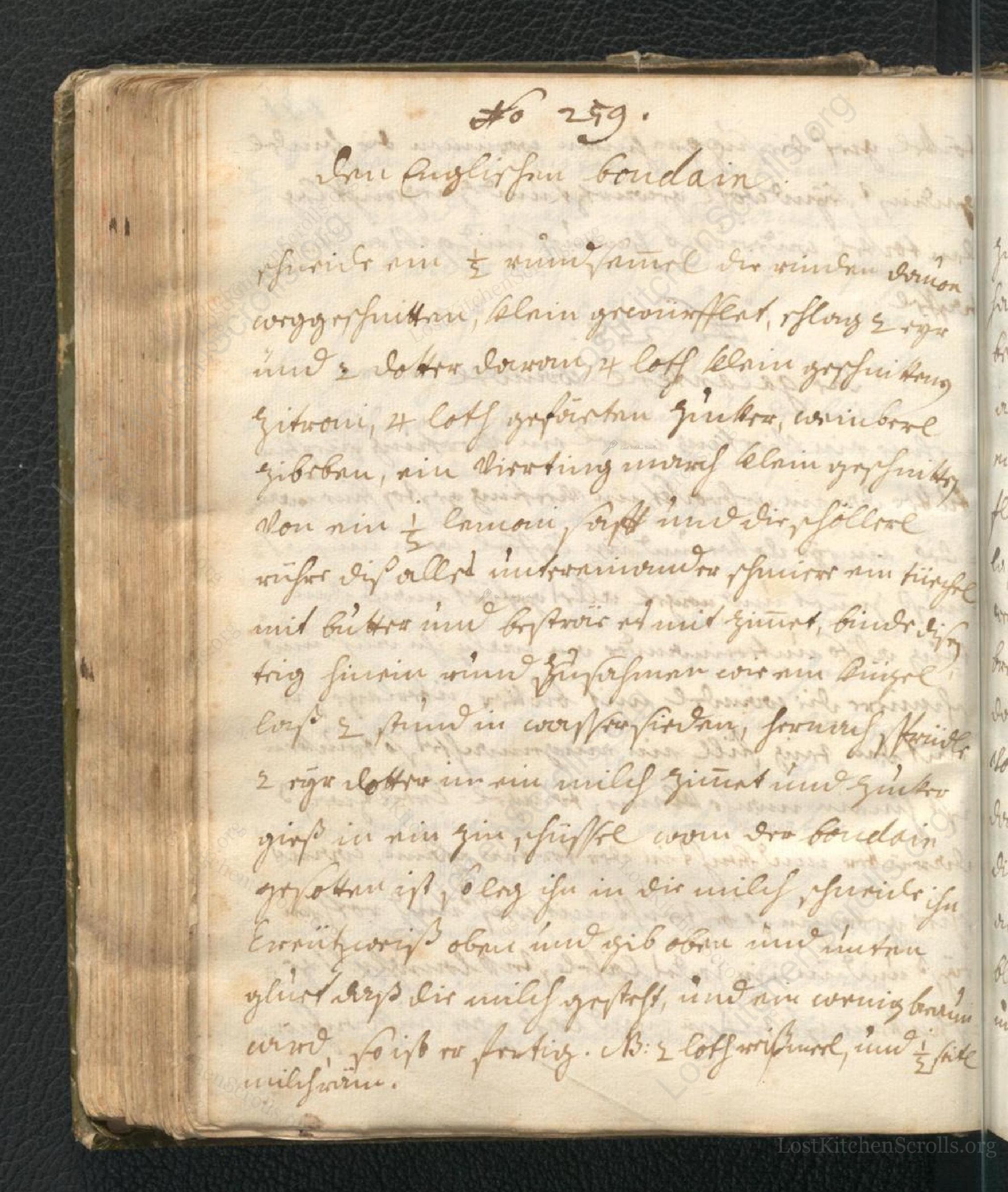
Ein Boudain
This recipe comes from an anonymous German-language manuscript cookbook from 169...
Ein Gesaltzen Citroni
This recipe, dating from 1696, comes from an extensive anonymous German cookbook...
Browse our complete collection of time-honored recipes