Athenian Soup—᾿Αθηναϊκὴ Σούπα
"Athenian Soup—᾿Αθηναϊκὴ Σούπα"
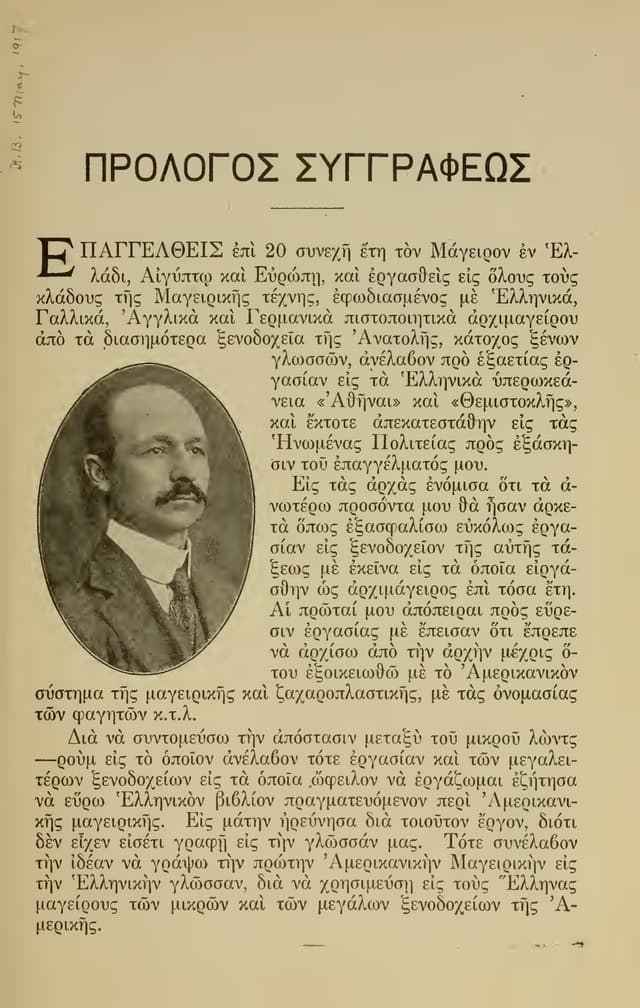
From the treasured pages of Megale amerikanike mageirike dia mageirous kai oikogeneias
Written by Michael Gkines
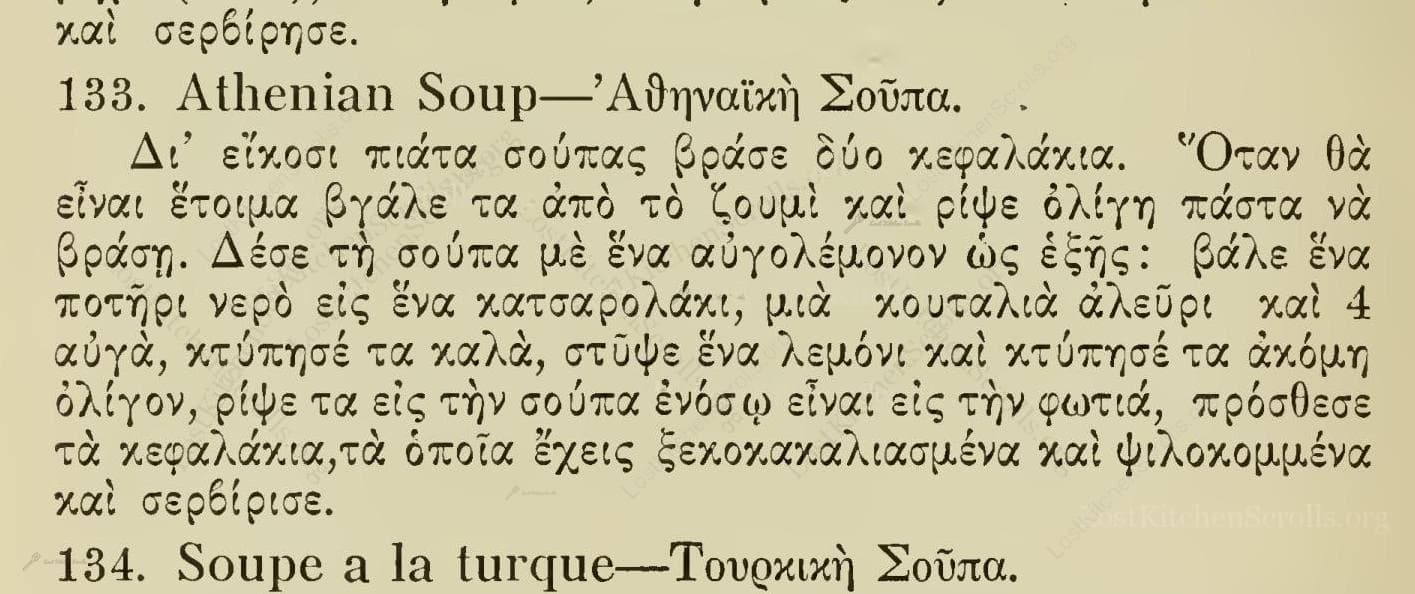
Athenian Soup—᾿Αθηναϊκὴ Σούπα
"Δι᾿ εἴκοσι πιάτα σούπας βράσε δύο κεφαλάκια. Ὅταν θὰ εἶναι ἕτοιμα βγᾶλε τα ἀπὸ τὸ ζουμὶ καὶ ρίψε ὀλίγη πάστα νὰ βράσῃ. Δέσε τὴ σούπα μὲ ἕνα αὐγολέμονον ὡς ἑξῆς: βᾶλε ἕνα ποτῆρι νερὸ εἰς ἕνα κατσαρολάκι, μιὰ κουταλιὰ ἀλεύρι καὶ 4 αὐγά, κτύπησέ τα καλά, στύψε ἕνα λεμόνι καὶ κτύπησέ τα ἀκόμη ὀλίγον, ρίψε τα εἰς τὴν σούπα ἐνόσῳ εἶναι εἰς τὴν φωτιά, πρόσθεσε τὰ κεφαλάκια,τὰ ὁποῖα ἔχεις ξεκοκκαλιασμένα καὶ ψιλοκομμένα καὶ σερβίρισε."
English Translation
"133. Athenian Soup—᾿Αθηναϊκὴ Σούπα. For twenty bowls of soup, boil two heads. When they are ready, take them out of the broth and add a little pasta to boil. Thicken the soup with an egg-lemon mixture as follows: put a glass of water in a small pot, a spoonful of flour, and 4 eggs; beat them well, squeeze one lemon and beat a little more, pour them into the soup while it is over the fire, add the heads which you have boned and finely chopped, and serve."
Note on the Original Text
The recipe is written in concise, practical language, assuming familiarity with basic kitchen techniques. Measurements are approximate and geared toward household cooking rather than strict scientific precision. The spelling reflects early 20th-century Katharevousa Greek, with some culinary terms borrowed from French (e.g., 'πάστα' for pasta) or Italian. The instructions move sequentially, with minimal explanation, relying on the reader's experience to bridge any gaps—a typical approach in community cookbooks of the era. The original text switches fluidly between narrative and method, a style that would have felt both homey and authoritative to its intended audience.
Title
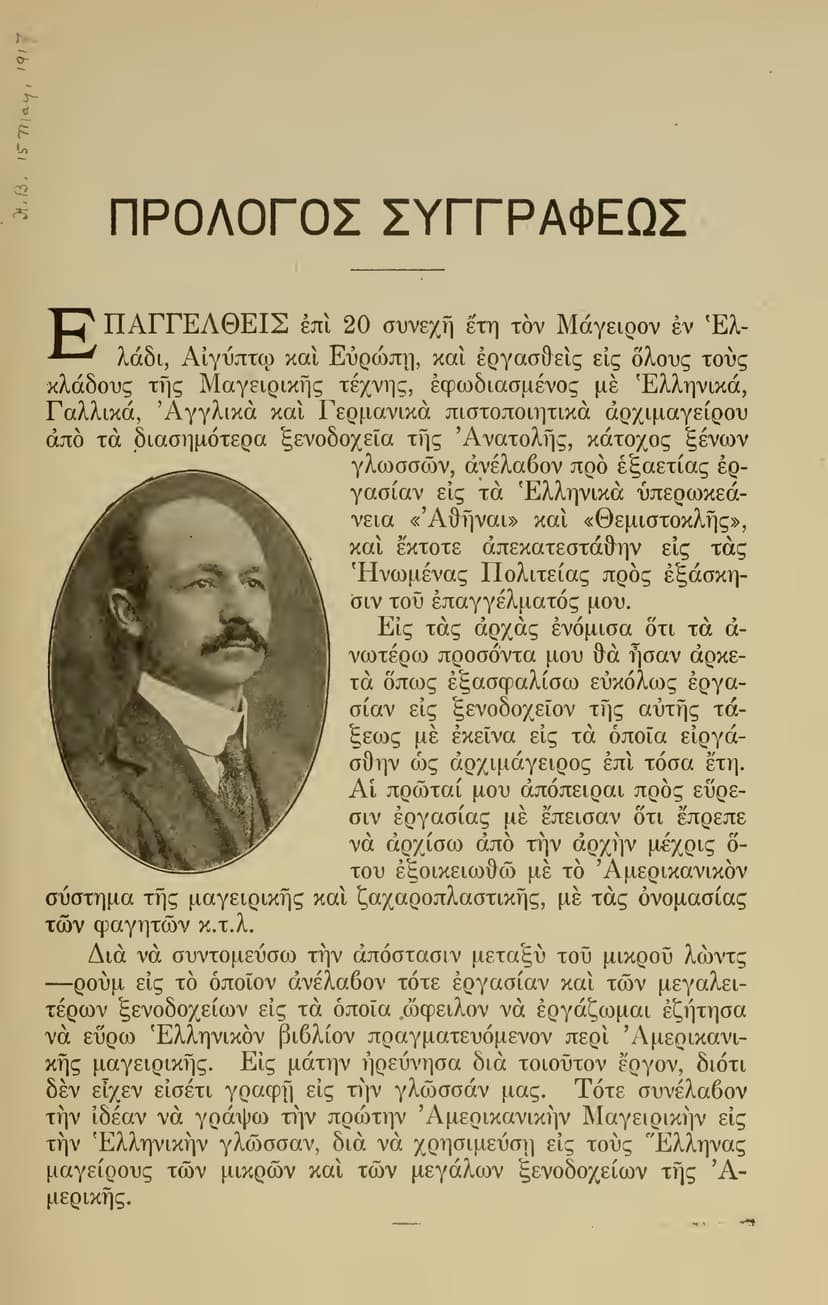
Megale amerikanike mageirike dia mageirous kai oikogeneias (1917)
You can also click the book image above to peruse the original tome
Writer
Michael Gkines
Era
1917
Publisher
Ekdotika Katastemata
Background
A sumptuous journey through early 20th-century Greek-American kitchens, this cookbook offers practical and time-tested recipes for savory dishes and delightful sweets—each crafted to suit the American system, yet infused with Greek tradition. A perfect companion for both family cooks and aspiring chefs.
Kindly made available by
Internet Archive
This recipe hails from 'Megale amerikanike mageirike,' a Greek-language cookbook published in New York in 1917 by Michael Gkines. The book was designed for Greek immigrants adapting to American life and kitchens, featuring both Hellenic tradition and practical solutions for the modern American household. The Athenian Soup is a classic example of resourceful home cooking, using affordable cuts such as fish or chicken heads and enriching the broth with the signature Greek avgolemono (egg-lemon) technique. This recipe reflects both the constraints and creativity of early 20th-century immigrant kitchens.
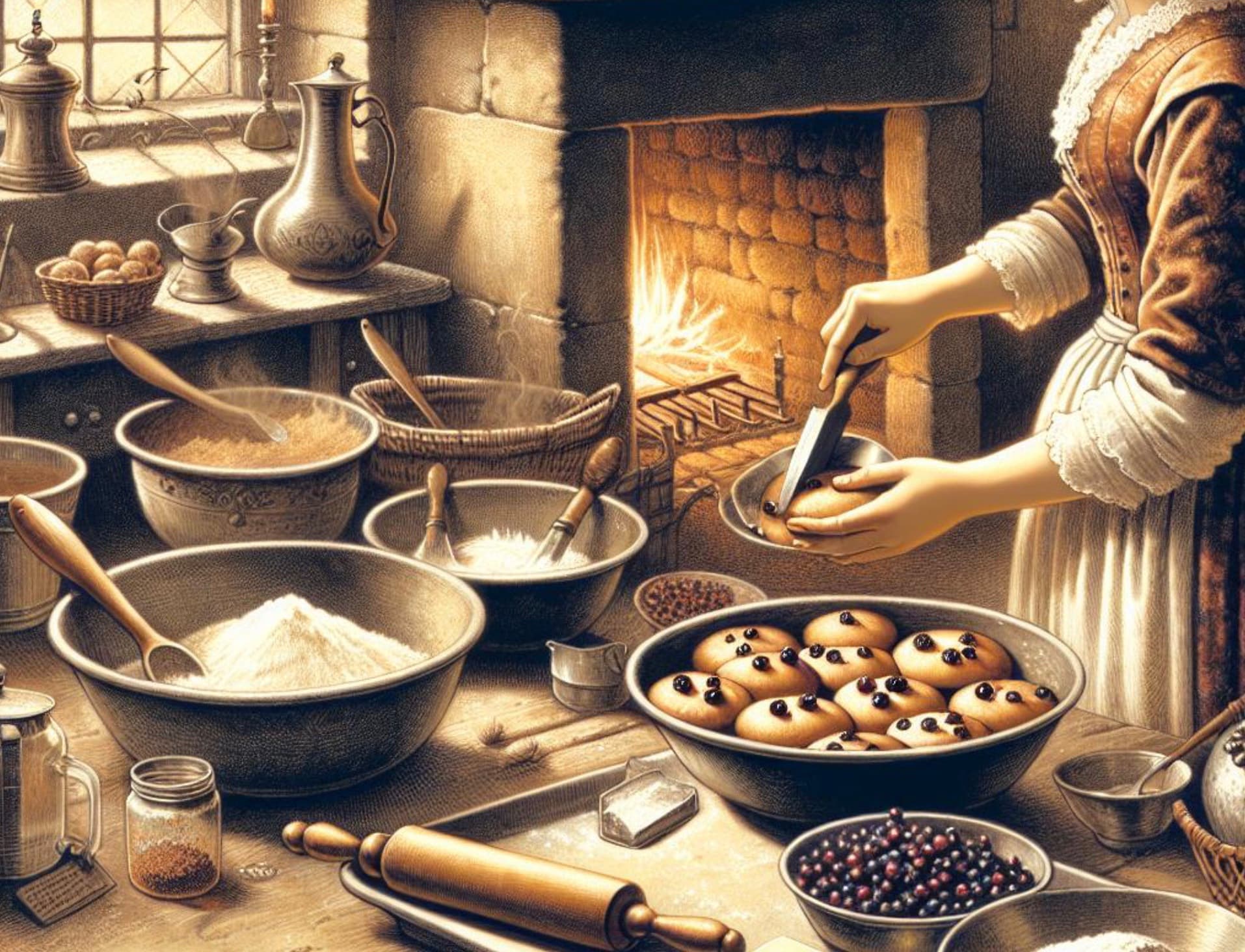
Historically, this soup would have been prepared with basic kitchen implements common in the early 1900s: a large stockpot for boiling the meat and preparing the broth, a slotted spoon or tongs for removing bones, a whisk or fork for beating eggs and blending the avgolemono, a small saucepan, a sharp knife for chopping the meat, and a sturdy wooden spoon for stirring. Open wood or coal-fired stoves would have heated the kitchen, and simple ceramic or metal bowls provided the serving vessels.
Prep Time
20 mins
Cook Time
1 hr
Servings
20
We've done our best to adapt this historical recipe for modern kitchens, but some details may still need refinement. We warmly welcome feedback from fellow cooks and culinary historians — your insights support the entire community!
Ingredients
- 2 small fish or chicken heads (approx. 18 oz total, or substitute with equivalent chicken pieces if needed)
- 3 1/4–3 2/3 quarts water
- 2 oz fine pasta (orzo or vermicelli noodles)
- 1 tablespoon (0.5 oz) all-purpose flour
- 4 large eggs
- Juice of 1 lemon (about 1 1/3 fl oz)
- Salt and pepper to taste
Instructions
- To prepare this classic Athenian Soup for 20 servings: Start by simmering two small heads (traditionally fish heads, though chicken may be substituted) in water to create a rich stock.
- Once the heads are cooked and the broth is flavorful, remove the heads from the pot.
- Add a small handful (about 2 oz) of fine pasta such as orzo or vermicelli to the simmering broth and cook until tender.
- While the pasta is cooking, prepare the traditional avgolemono (egg-lemon) enrichment: In a saucepan, whisk together 1 glass (about 7 fl oz) water, 1 tablespoon (about 0.5 oz) flour, and 4 eggs until smooth.
- Juice one lemon and whisk it into this mixture.
- Slowly pour the egg-lemon mixture into the hot soup while whisking or stirring, ensuring the soup is still over gentle heat to thicken slightly without curdling the eggs.
- Flake the cooked meat from the heads, chop it finely, return it to the soup, and serve immediately, piping hot.
Estimated Calories
60 per serving
Cooking Estimates
It takes about 20 minutes to prepare the ingredients, and then about 1 hour to cook the soup, including simmering the heads for stock and finishing the avgolemono. Each serving has roughly 60 calories, based on the ingredients used. The recipe makes enough for 20 servings.
As noted above, we have made our best effort to translate and adapt this historical recipe for modern kitchens, taking into account ingredients nowadays, cooking techniques, measurements, and so on. However, historical recipes often contain assumptions that require interpretation.
We'd love for anyone to help improve these adaptations. Community contributions are highly welcome. If you have suggestions, corrections, or cooking tips based on your experience with this recipe, please share them below.
Join the Discussion
Rate This Recipe
Dietary Preference
Main Ingredients
Culinary Technique
Occasions
Den Bockfisch In Einer Fleisch Suppen Zu Kochen
This recipe hails from a German manuscript cookbook compiled in 1696, a time whe...
Die Grieß Nudlen Zumachen
This recipe comes from a rather mysterious manuscript cookbook, penned anonymous...
Ein Boudain
This recipe comes from an anonymous German-language manuscript cookbook from 169...
Ein Gesaltzen Citroni
This recipe, dating from 1696, comes from an extensive anonymous German cookbook...
Browse our complete collection of time-honored recipes